Two-Photo AI Kiss Video: Private Draft and Deletion
After making a consented two-photo AI kiss video, keep the first output private, limit access to the people who agreed to see it, share it only in the agreed context, and remove files and posts you control if permission or distribution scope changes. A completed generation is not a permanent right to keep, forward, or reuse a depiction of someone.
This checklist starts after the consent and input decision. If you still need to decide whether to make the video, read the consent-first two-photo AI kiss video setup guide. That guide covers permission, compatible adult portraits, generation, and disclosure. This companion covers the separate operational question: what to do with a private draft and its source files once it exists.
Treat the first output as a private review copy
“Private” should mean more than unpublished. Before anyone generates, agree who may open the draft, where it may be stored, whether it may be downloaded, and whether either person can ask for its removal. A private chat, shared drive, personal device, client review folder, and social-media draft are different access environments.
Use a short label in the project note or file name, such as “private review only—do not forward.” The label is not a legal control, but it makes the agreed boundary visible to the people who handle the file. It is especially useful when a creator, client, editor, or agency is involved.
| Decision | Agree before sharing the draft | Why it matters |
|---|---|---|
| Viewers | Name the people who may watch it | A private draft is not an open team asset |
| Storage | Choose the approved device, folder, or workspace | Copies can spread through ordinary collaboration tools |
| Download | Decide whether recipients may save an export | A preview link and a downloaded file create different retention paths |
| Distribution | Name the allowed channel and audience, if any | “Post it later” is not a destination or audience |
| Change of mind | Choose a direct contact and removal expectation | A clear exit is easier to honor promptly |
Do not use the label to create false confidence. If a platform, storage provider, collaborator, or recipient can retain a copy outside your control, say so plainly. A responsible workflow reduces avoidable access; it cannot guarantee that every copy everywhere disappears.
Review together before a wider share
Where practical, invite the adults depicted to review the full draft before anyone posts, forwards, or uses it in a promotion. Watch the entire output rather than approving from a thumbnail or the first second. Check whether it introduces a more intimate gesture, a changed identity, altered clothing, a misleading location, or another element outside the agreement.
Use this go/no-go list:
- Are the viewers still limited to the agreed people?
- Does the finished clip match the agreed scene and tone?
- Does any person want a change, a different use limit, or no share at all?
- Does the caption avoid implying a real recorded event or relationship?
- Have sound, music, and other assets been cleared separately?
If any answer is uncertain, keep the draft private and pause. Do not turn a request for time into an informal approval. A new prompt or a replacement export is a new item to review, even when it came from the same two source photos.
Share only to the agreed audience
Before you send or post the result, write down the destination and audience in ordinary language: “only the two people in a direct message,” “a named client reviewer,” or “this account’s public followers with an AI-generated label.” Avoid broad phrases such as “online,” “social,” or “wherever it performs well.” They do not tell a collaborator what is permitted.
For a public or promotional post, check the platform’s current synthetic-media requirements. For example, YouTube’s disclosure guidance says creators must disclose realistic altered or synthetic content in certain situations, including content that makes a real person appear to do something they did not do. That disclosure is an audience-transparency measure, not permission from the people depicted and not a substitute for consent.
If the original agreement allowed only a private draft, obtain a new, explicit agreement before public sharing, paid promotion, reposting, editing, or giving the file to another person. A credit already spent on generation does not expand the permitted audience.
Make a practical retention decision
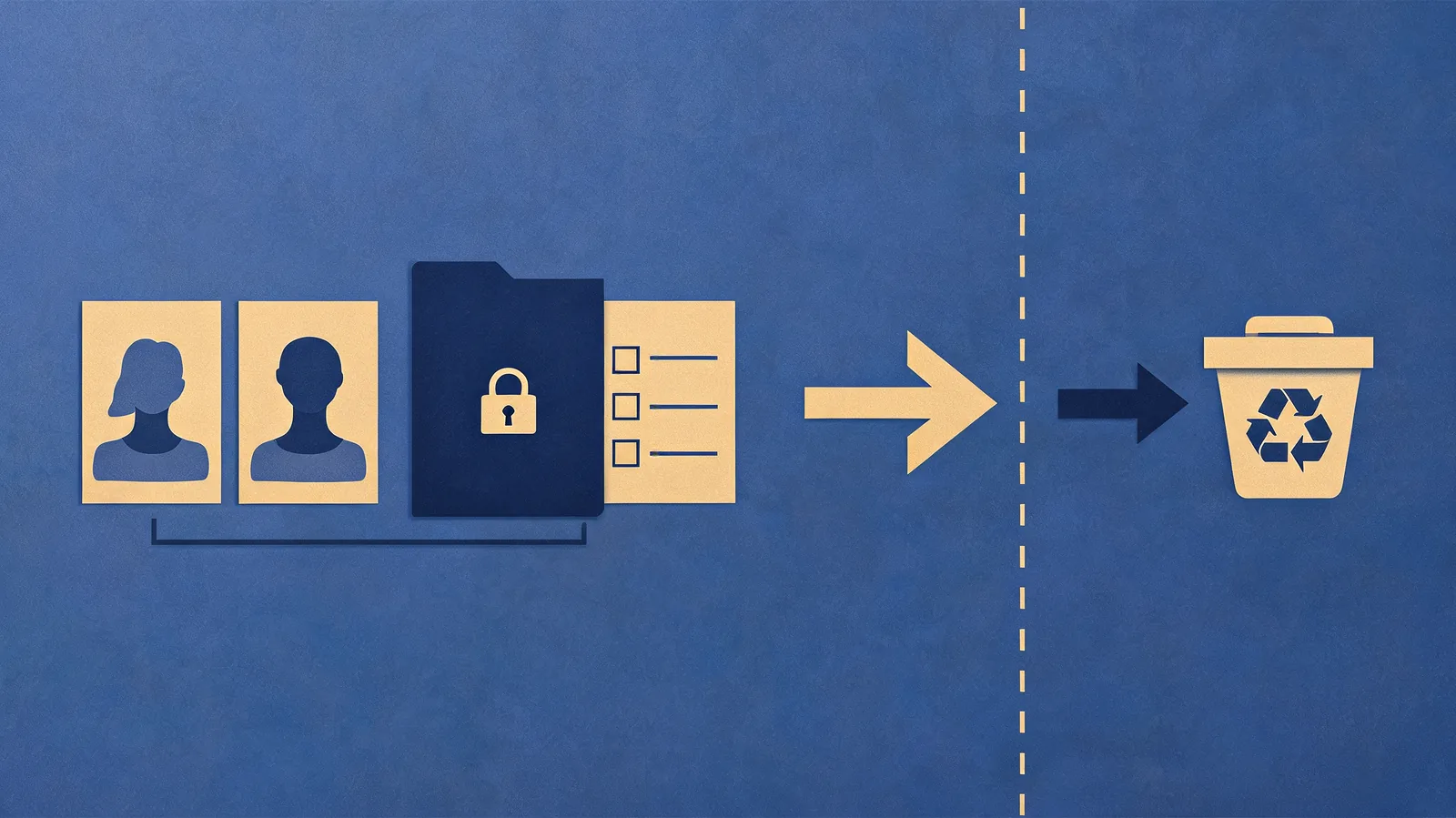
Choose how long you need the sources, draft, and final export. Keep the decision specific: for example, “retain through client review,” “delete the working files after the private viewing,” or “keep only the approved final export until the campaign closes.” Do not keep files indefinitely just because storage is available.
Separate the file types when you decide:
- Source photos: the two original portraits and any uploads made for the project.
- Working files: generated drafts, exported previews, captions, edit-project files, and review notes.
- Published copies: files on accounts or channels you control, plus any scheduled or archived versions.
Record what was deleted and what could not be confirmed. If a platform has its own retention, backup, or deletion process, consult its current controls and terms rather than promising an immediate platform-wide erasure. Avoid saying that you deleted a recipient’s copy unless they confirm it; you can truthfully say that you requested removal and removed the copies you controlled.
Content provenance tools can help keep a record of how a file changed, but they do not solve consent or deletion. The C2PA specifications describe a technical approach to provenance. They are not proof that a depiction should be retained, forwarded, or published.
When someone changes their mind
Take a withdrawal or scope change seriously and act promptly. First, stop planned sharing and remove posts, drafts, scheduled uploads, and local working copies you control. Next, tell collaborators who received the material that the agreed use has changed and ask them to stop use and remove their copies. Keep the message factual; you do not need to circulate the video again to explain the request.
Then update the project note with the date, the revised scope, and the steps completed. This is not an argument about ownership. It is a way to avoid accidental reuse by a teammate who did not know the decision changed.
| Situation | Immediate action | Follow-up |
|---|---|---|
| A person withdraws permission before posting | Stop distribution; remove local drafts you control | Tell named collaborators and record the request |
| A private draft was forwarded outside the agreement | Ask the recipient to stop forwarding and delete it | Remove your accessible copies; assess whether the affected person needs to know |
| A public post is no longer approved | Remove the post, scheduled version, and platform draft you control | Request removal from collaborators or reposting accounts |
| A client wants a new use | Treat it as a new decision | Obtain clear agreement for the new channel, audience, and duration |
No checklist can retrieve a copy from an unknown viewer or erase material beyond systems you control. Be honest about that limit. The safest response is rapid containment, a clear request to known recipients, and no additional uploads while the situation is unresolved.
Keep product claims modest and current
ClipTrend’s French Kiss generator is the public product page to consult for current two-photo workflow controls. It is not a promise about your storage, an approval record, or a substitute for a distribution agreement. Use only images you are allowed to upload, and check the live page before beginning a new generation.
This article does not provide legal advice. Privacy, consent, platform moderation, and deletion obligations depend on the people involved, location, contract, and service you use. If the project is commercial, involves a client, or could expose someone to harm, use the organization’s privacy and approval process before creating or retaining the file.
FAQ
Is a private AI kiss video draft safe to forward?
Only forward it to the specific people who agreed to receive it. “Private” is not a blanket permission to send a file to friends, a group chat, a client team, or another platform.
What should I delete if someone withdraws permission?
Remove source photos, generated drafts, exports, scheduled posts, and published copies that you control. Ask known collaborators and recipients to stop using and delete their copies, but do not claim to have erased copies you cannot access or verify.
Can I repost a private draft later if it performs well?
Not without a new agreement for the new channel and audience. A private viewing, public post, paid promotion, and remix are different uses with different distribution risks.
Does an AI disclosure label make sharing okay?
No. A label can help viewers understand that media is synthetic, but it does not create consent or expand an agreed audience. Check the destination platform’s current requirements as well as the people’s stated boundaries.
Keep the boundary visible
The respectful post-generation workflow is straightforward: name who may access the draft, review it before wider sharing, set a retention decision, and act quickly if the scope changes. For the earlier consent and input stage, begin with the two-photo AI kiss video setup guide, then keep every later use within the agreement.