AI Prom Generator: A Careful First Test With an Adult Photo
For an adult-only first test of an AI prom generator, use one clear photo you have permission to animate, ask for one formal look, and judge the complete result before you share it. Start with a simple head-and-shoulders or head-to-waist image, avoid a real school or event claim, and stop if the output changes a face, body, age cue, or context in a way you did not approve. This is a careful test workflow, not a promise that every output will be usable.
Last updated: September 18, 2026 · about 9 min read
What this first test is—and is not
An AI prom generator is useful for a stylized, adult formalwear concept: upload one permitted image, request a gown or tux look, then review the generated still or short clip. It is not a substitute for a photographed event, a way to make an age or relationship claim, or permission to use another person's image.
For this guide, “adult photo” means a photo of you or another person aged 18 or older who has agreed to this specific transformation and the intended sharing. If you cannot establish that, choose a non-person image or do not run the test. A public profile photo, an old group shot, or a picture someone sent you is not automatically permission for a synthetic formal portrait.
ClipTrend's live AI Prom Generator currently accepts one uploaded image. Its production page describes a gown-or-tux restyle and a short vertical reveal; the page is the source of truth for its current controls, credits, output conditions, and availability. We verified that page on September 18, 2026. Do not rely on this article for a future price, turnaround time, or export term.
Use a bounded brief before you upload
The most useful first test answers one question. Examples include: “Can the tool retain this adult face in a formal portrait?” or “Can this crop support a simple tux or gown restyle without changing the person?” A first test becomes hard to evaluate when it also asks for a new venue, friends, dancing, text overlays, a date, and an elaborate camera move.
Choose a source photo with these characteristics:
- One consenting adult, with the face visible and not obscured by a hand, sunglasses, or a filter.
- Steady lighting and enough resolution to see the outline of the head, shoulders, and clothing.
- A crop that matches the question: head-and-shoulders for likeness; head-to-waist if the outfit silhouette matters.
- No third party, visible badge, address, children, or school context that you do not want carried into the output.
Keep a short note alongside the upload: source owner, permission, date, intended audience, and the exact brief. That note is not bureaucracy. It lets you tell the difference between a model problem and a request you never clearly limited.
A careful five-step adult-photo test
- Confirm the person and the scope. Ask the adult depicted whether they are comfortable with an AI formalwear transformation, a short animation if applicable, and the places where it may be shared. Get a new answer if the use changes from a private message to a public account or a paid promotion.
- Use a neutral source. Start with an ordinary, well-lit portrait rather than a wedding image, a professional headshot governed by an employer, or a photograph tied to a real prom. The test should assess the transformation, not borrow the credibility of an event that did not happen.
- Request one restrained look. Keep the brief factual: an elegant adult gown or tailored tux, soft formal lighting, and a calm pose. Do not ask the system to make the person younger, imitate a named celebrity, fabricate a date, or place them at a real school.
- Review the whole output. Watch a generated clip from the first frame to the last. For a still, zoom in at normal reading size and at the crop you would post. A flattering thumbnail cannot prove that the subject remains recognizable throughout the result.
- Decide on a small next action. Keep, revise, or discard the output. If a second try is needed, change one thing—the crop, the source photo, or the desired look—rather than adding more styling instructions all at once.
What to examine before calling the test a pass
The appropriate threshold depends on your use. A private concept shared with the person pictured has a different risk profile from an account representing a business or an event. Still, the review questions below are a useful baseline.
| Review area | Ask this before sharing | A reason to stop |
|---|---|---|
| Identity | Does the adult still look like the permitted source person? | The face, complexion, body, or apparent age changed in a way that could misidentify them. |
| Clothing | Is the formal look ordinary and aligned with the agreed brief? | The result is sexualized, demeaning, implausibly revealing, or otherwise outside the agreed scope. |
| Context | Does it avoid presenting a fabricated event as documentary evidence? | It adds a recognizable school, venue, date, class year, or other factual-looking detail. |
| Motion | Are the start, middle, and end stable enough for the intended crop? | Hands, facial features, clothing edges, or background objects warp or jump. |
| Audience | Is the planned recipient or channel consistent with the person's consent? | A private concept is about to become a public post, ad, or portfolio item without renewed approval. |
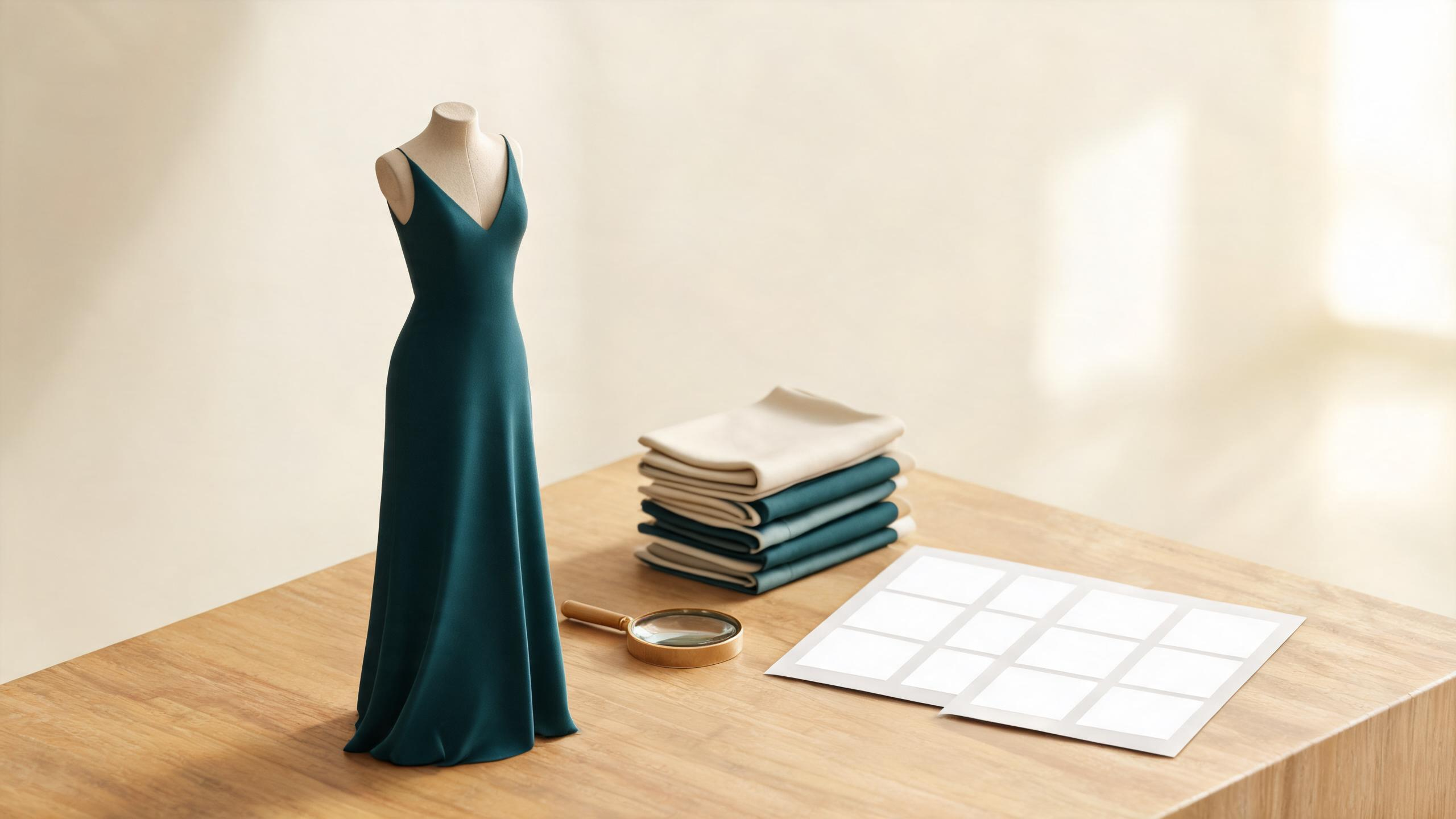
This editorial illustration represents a review setup, not a claim that ClipTrend will reproduce a particular garment, person, venue, or result.
Make the caption as honest as the image
If you publish an AI-generated formal look, use a caption that does not imply an event was photographed. “AI-generated formalwear concept made from a permitted adult portrait” is more accurate than naming a real prom, school, photographer, date, or attendance. If the image is connected to a business, campaign, or public-facing profile, have the owner or approver review both the visual and the words around it.
Platform rules and labels can change. TikTok's AI-generated content guidance is one current platform source to review before posting there. It does not decide whether you have consent, image rights, or permission for a particular use; those questions remain yours to resolve.
Avoid language such as “my prom photo” or “our prom night” when the event did not happen. A disclosure does not repair a misleading claim, but it helps an audience understand that the formal look is generated rather than documentary.
When a first test should end without a post
Discarding an output is a normal result. Do not keep iterating if the source person is uncomfortable, you are unsure whether they are an adult, the transformation adds a sensitive implication, or the image will be read as evidence of a real event. Likewise, pause when the result contains unstable facial details, unfamiliar symbols, unreadable text-like marks, or a background that suggests a real location you did not ask to depict.
If the purpose is simply to explore a look, keep the image private with the person who approved it. If the purpose is a public creative exercise, use a fictional adult subject or a photo with documented permission, remove unnecessary personal context, and plan an accurate disclosure before generating.
For a broader source-image workflow, see ClipTrend's AI image-to-video guide. For the actual one-photo prom-look controls, start on the AI Prom Generator rather than assuming the test flow described here is permanent.
FAQ
Can I use an AI prom generator with any photo I find online?
No. Use a photo of yourself or a consenting adult whose permission covers this transformation and the intended sharing. Public availability is not the same as permission to create or publish a synthetic formalwear version.
Why does this guide specify an adult photo?
The guide is intentionally limited to consenting adults. If you cannot confirm that the person is at least 18 and has agreed to the specific use, do not run the portrait transformation.
What photo is best for a first test?
Use a clear, well-lit image of one consenting adult. A head-and-shoulders image is useful for checking likeness; a head-to-waist image can make it easier to assess the formal outfit shape. Avoid crowded, filtered, or context-heavy photos.
Does an AI-generated prom look prove that someone attended an event?
No. A generated formal portrait or short clip is not evidence that an event, relationship, venue, or photographer was real. Do not caption or present it as documentary material.
What should I do if the output changes the person's face or body?
Do not share that version. Try a clearer permitted source image or a more limited brief only if the adult pictured remains comfortable with another attempt. Otherwise, delete the output and stop the test.
Sources and limitations
- ClipTrend, AI Prom Generator, checked September 18, 2026 for the current one-photo workflow and product claims.
- TikTok Support, AI-generated content guidance, checked September 18, 2026 for platform-specific labeling context.
This article is editorial guidance, not legal advice. It does not verify a person's age, consent, image rights, or a platform's current enforcement; review the live product and destination-platform rules before publishing.