Are Jelly Beds Real? How the Viral AI Video Effect Works
Most viral jelly-bed clips are not evidence of a new mattress you can buy. They are synthetic videos built around an exaggerated visual idea: a glossy, translucent bed that visibly squashes and bounces. ClipTrend's Jelly Mattress template turns that clearly fictional premise into a short effect; it should be presented as an AI-made clip, not a product demonstration.
Last updated: July 23, 2026 · about 6 min read
The confusion makes sense. A convincing short video can show a person landing on a bright jelly surface, deep ripples moving through it, and a dramatic rebound. The visual language resembles a product demo, but the physics and materials are intentionally surreal.
Why jelly-bed videos look plausible
The effect borrows familiar details: a normal bed frame, pillows, daylight, a bedroom, and someone testing a mattress. Then it replaces the mattress with a transparent, oversized jelly object. The contrast between ordinary context and impossible material is the joke.
| What you see | Why it can look real | What to question |
|---|---|---|
| Strong glossy reflections | Gel, water, and glass all reflect light | Whether the material bends and rebounds plausibly |
| A person landing on the bed | Mattress demos use the same setup | Whether body weight and contact behave consistently |
| Short vertical video | Familiar social-video format | Whether there is a source, maker, or real product page |
| Big surface ripples | Water and gel suggest motion | Whether the room and person change between frames |
The goal is not to debunk every playful clip. It is to keep a synthetic effect from being mistaken for a product claim. For the wider format, see why viral AI video templates spread.
Look for the visual giveaway, then check the context
One odd frame does not prove a video is AI-generated. But a cluster of signals should make you pause: changing bed edges, a person’s clothing changing texture, ripples moving through a solid frame, impossible compression, or a video that has no manufacturer, material description, price, or safety information.
Do not infer that a creator is trying to deceive you just because a video uses an effect. The responsible version is simple: make the fictional nature clear in the caption or nearby text. “AI-generated jelly-bed concept” tells viewers what they need to know.
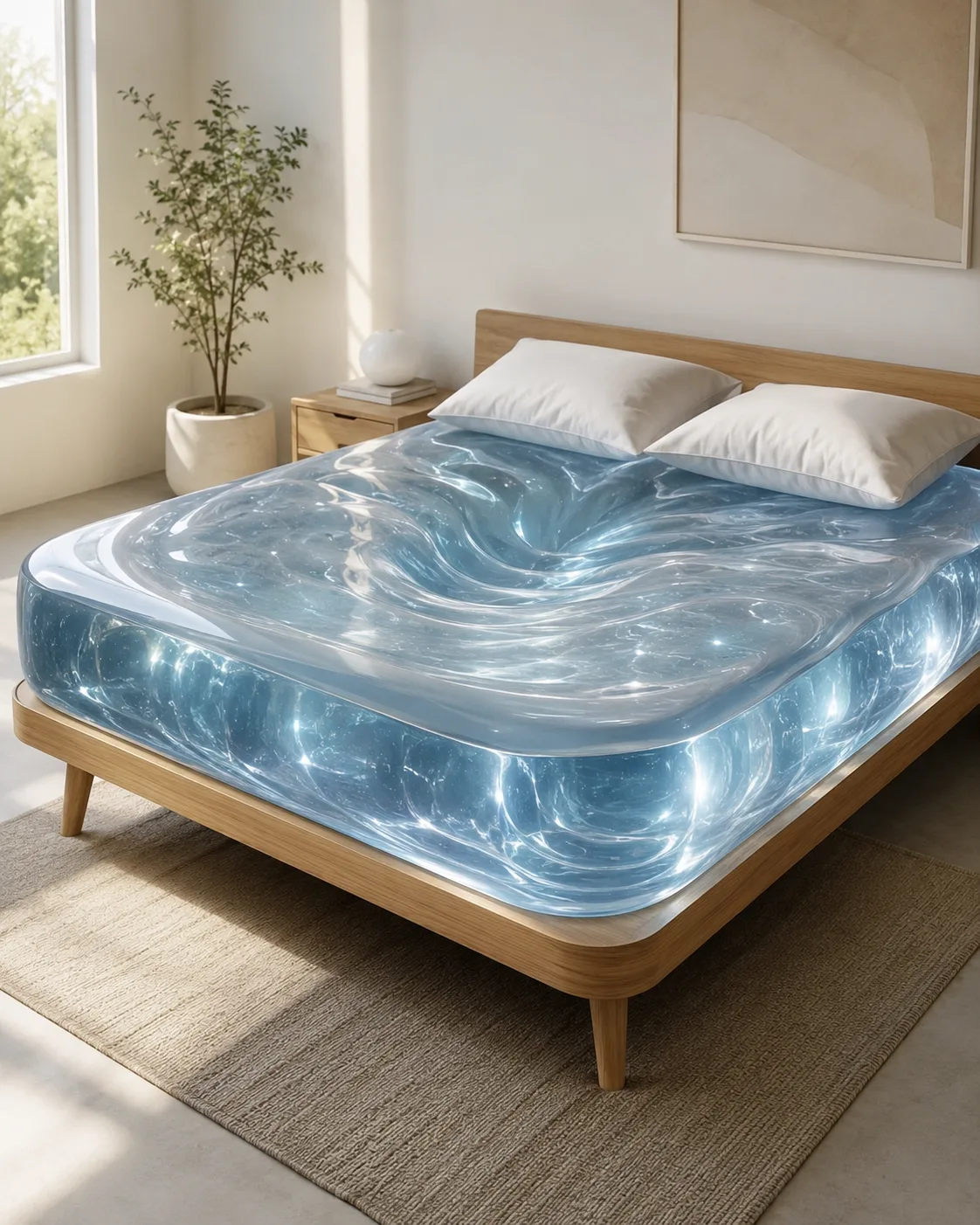
This is an intentionally fictional illustration. It is not a product photo or a claim that a real jelly mattress is for sale.
How an image-to-video effect creates the illusion
An AI video template uses a source image or a preset scene as the starting visual, then generates short motion around a recognizable beat. In this case, the beat is the bounce: approach, contact, compression, rebound. The first image matters because it tells the model what the room, person, bed, and camera should keep stable.
If you create one, simplify the scene. Use one bed, one camera angle, one short movement, and no text inside the generated frame. A busy bedroom, a moving camera, and a complex action all make it harder to review the result. The AI image-to-video generator guide explains why a clean source improves short-form motion.
Publish a playful effect without confusing viewers
Before sharing, ask three questions:
- Does the caption or context say that the video is AI-generated?
- Could a viewer mistake it for a real mattress, safety test, or purchase recommendation?
- Have you avoided real company logos, price claims, and invented product specifications?
If the answer to the second question is yes, make the disclosure more obvious or change the framing. The effect is strongest when the audience understands the premise and can enjoy it as a visual experiment.
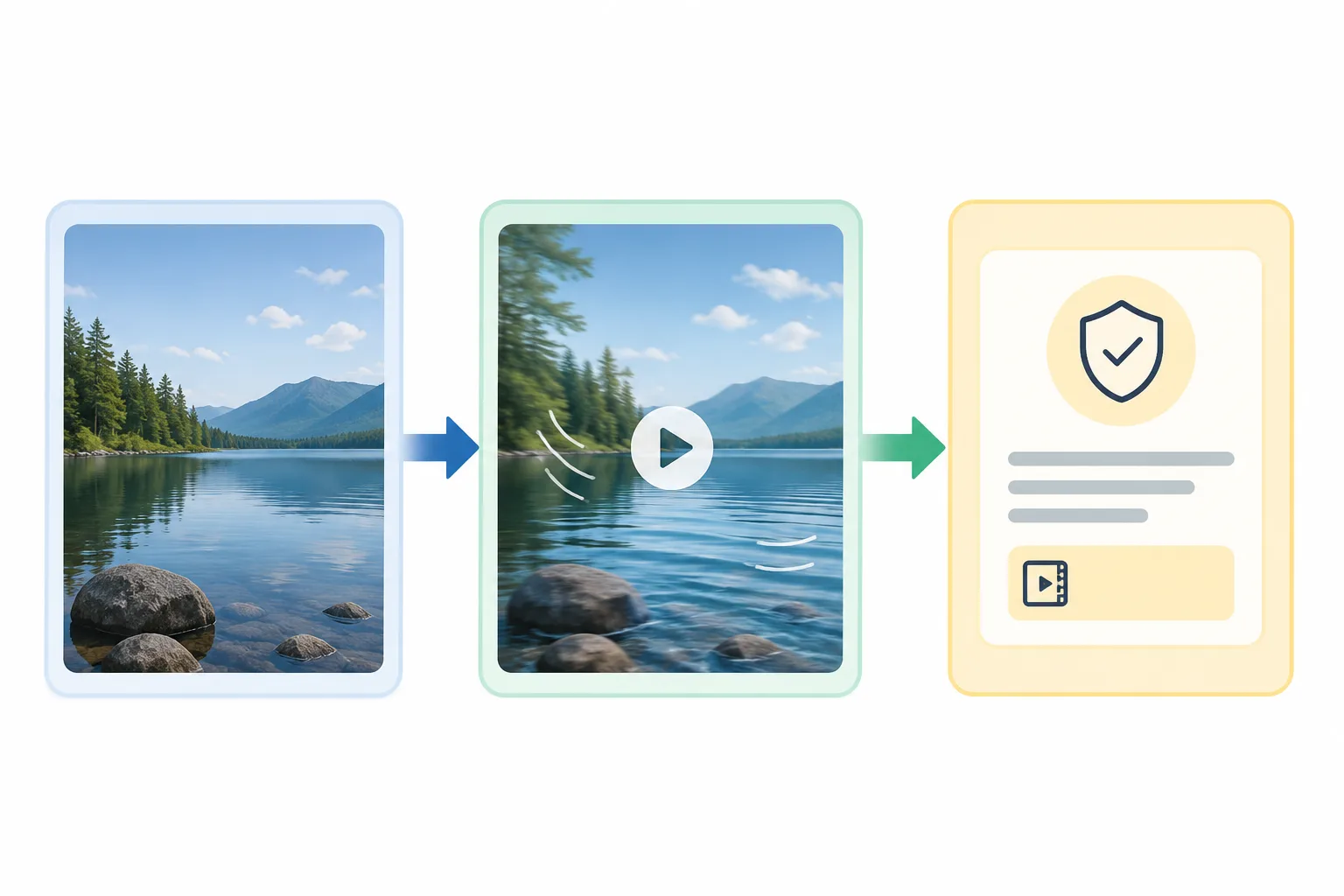
The second visual explains the workflow rather than repeating the jelly-bed scene: make the effect, then label it clearly before it travels.
FAQ
Are jelly beds real?
Many viral jelly-bed clips are AI-generated or heavily edited visual effects, not evidence of a physical mattress product. Check for a credible manufacturer and product information before treating a video as a real item.
Can I make a jelly-bed video with AI?
Yes, an image-to-video template can create a short fictional bounce effect. Use a simple scene, avoid real brand claims, and label the result as AI-generated when viewers could mistake it for real footage.
Why should I disclose a synthetic jelly-bed video?
The effect can look like a product demo. A clear disclosure helps viewers understand that the material, motion, and scene are fictional rather than a real purchase or safety claim.
Related guides
- Try the Jelly Mattress template →
- AI image-to-video generator
- Viral AI video templates: what makes them spread
- TikTok AI video trends with templates
- AI video template checklist
Keep the premise visible
The point of the Jelly Mattress template is an impossible visual beat, not a fake product demonstration. Make the clip clear, synthetic, and easy to enjoy for what it is.