How to Measure Whether an AI Video Template Works
To measure an AI video template, test two versions with the same source, message, placement, and review window. Change one meaningful variable—usually the opening motion or template—and record what viewers did, not just the biggest view count.
Last updated: July 25, 2026 · about 5 min read
Set up a fair comparison
An AI video template is not a marketing strategy by itself. It is a reusable visual structure. If one version has a new product, a different caption, a different audience, and a different template, its result does not tell you which variable helped.
| Keep steady | Test | Why |
|---|---|---|
| Source photo and crop | Template A vs Template B | Isolates the visual structure |
| First-second message | Opening motion | Shows whether the hook is clearer |
| Caption and CTA | Length or ending beat | Keeps the comparison readable |
| Posting window | Placement and audience | Reduces timing noise |

A useful comparison starts with fewer moving parts, not more dashboards.
Pick metrics that match the job
For a short social clip, start with three questions:
- Did people stay long enough to understand the opening?
- Did the intended next action happen: a profile visit, click, save, or reply?
- Did comments show confusion about the product, person, or claim?
Views can be a useful signal, but a large number alone cannot prove a template is right for your product. A dramatic effect may win an early scroll stop and still make the source harder to understand.
Review the render as well as the numbers
Before you interpret performance, inspect both versions. Are faces, hands, products, and key edges stable? Is any on-screen wording inaccurate? Did the crop hide the thing viewers need to see? A clean production review prevents you from “winning” with an unusable clip.
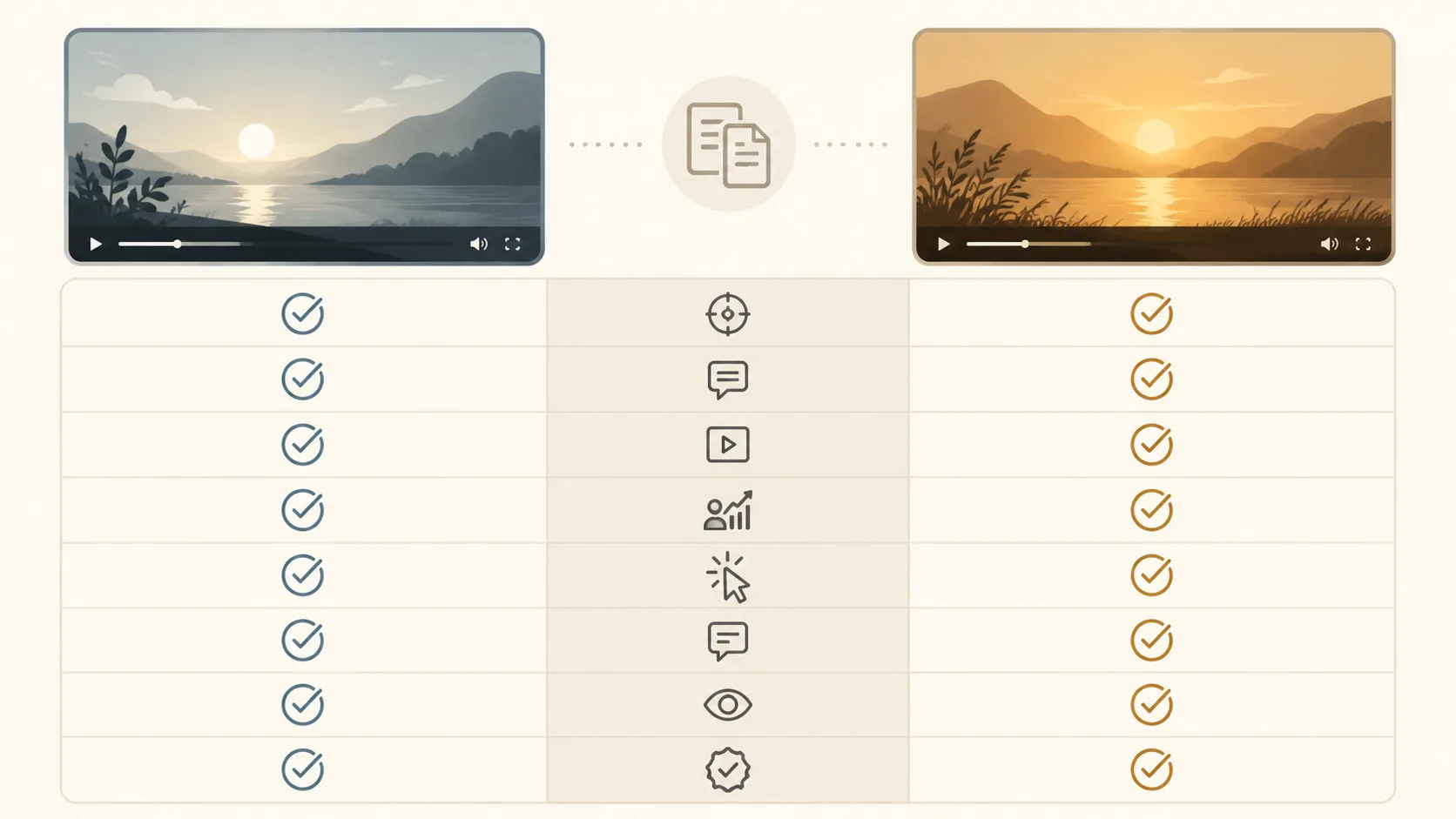
Measure what the audience did and whether the asset is safe to keep using.
Run the next test from what you learned
If Template A gets a clearer opening but weaker completion, test the ending next. If Template B produces better saves, keep the source and CTA steady and see whether the result repeats. Do not turn one small test into a universal rule.
Use AI video templates to create controlled candidates, then use the template checklist before each render. The aim is not to chase a single viral number. It is to build a repeatable way to decide which format helps your audience understand the message.