Talking Object Video Script: A Short-Form Formula
A talking object video script works when one recognizable object has one point of view, faces one small situation, and lands one clear final line. Write the object as a fictional character, keep the dialogue short enough for a single viewing, and put real product facts, prices, and offers in a reviewed caption or end card—not in the generated performance.
Last updated: September 2, 2026 · about 7 min read
This companion does not replace our earlier AI video templates for talking objects. That guide helps you choose the object, source image, personality, and template. This page answers the different writing question: what should the object actually say, and how do you keep the line useful, clear, and honest?
Give the object one reason to speak
Start with an original or permitted object that the viewer can identify at a glance: a plain mug, lamp, sneaker, water bottle, toaster, or desk plant. The script comes after the visual setup. If the object is hidden, tiny, or one of several competing products, a clever line will not rescue the scene.
Choose one point of view that comes from the object's ordinary role. A desk lamp can be dramatic about another late night. A water bottle can be an over-eager coach. A sneaker can be impatient to leave the house. That simple connection gives the joke a premise without needing a backstory.
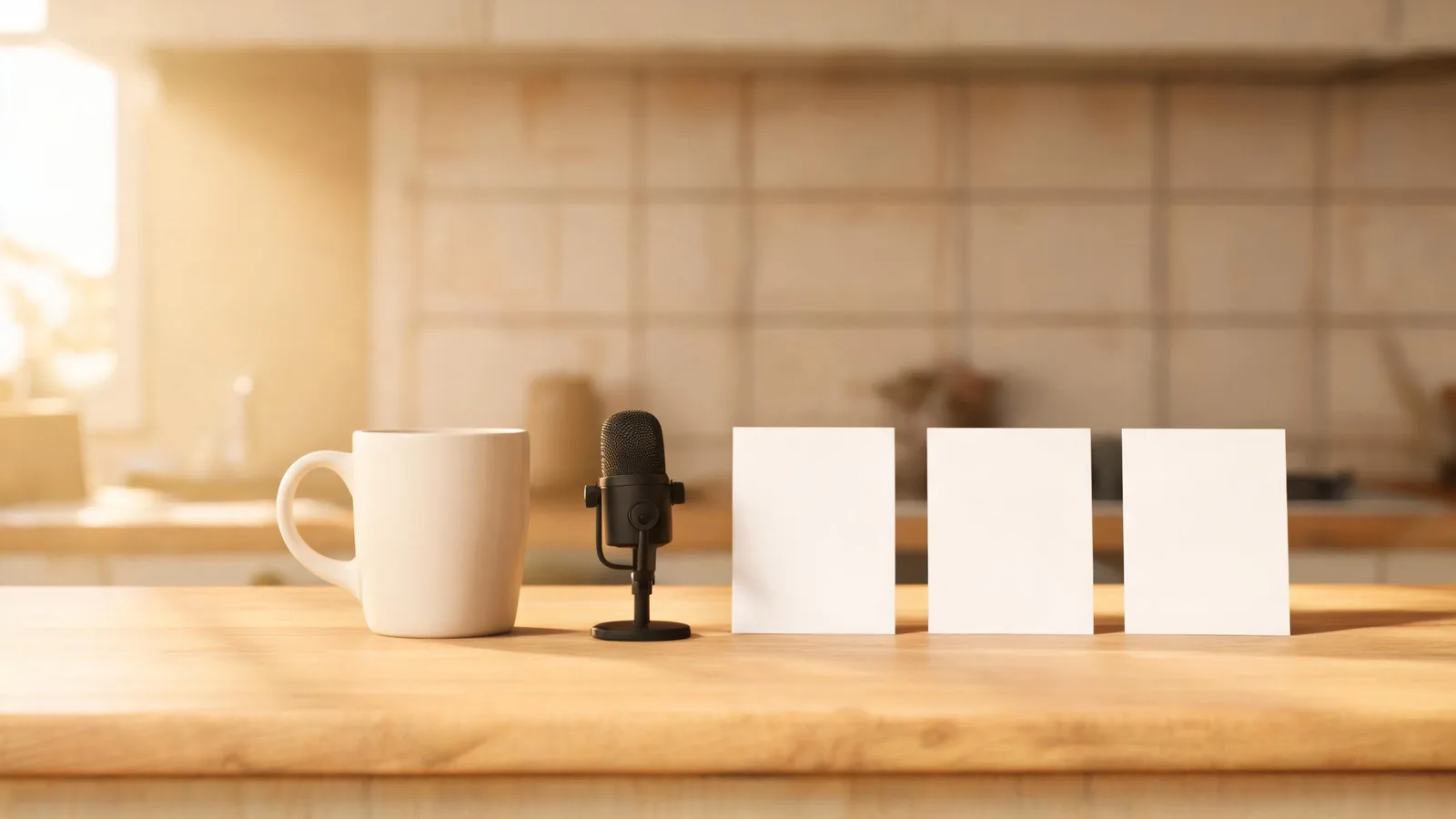
One clear object and one small perspective are enough to give a short script a visible setup.
Use the four-beat short-form formula
A talking object clip does not need a monologue. Use four compact beats that each have a job:
| Beat | What the viewer needs | Example direction |
|---|---|---|
| Recognize | See the object and its situation | A desk lamp sits beside an open notebook |
| Hook | Hear a viewpoint immediately | “I have a bright idea. It is bedtime.” |
| Turn | Give the situation one small escalation | The light flickers as another task arrives |
| Button | End on a line or visual that completes the thought | The lamp turns itself off |
Write the line in the object's voice, not in marketing copy. The object can complain, give a gently absurd observation, or react to a routine problem. It does not need to explain every feature, recite a slogan, or make a claim that a customer could mistake for a verified promise.
Here is a deliberately modest example for a fictional generic mug:
“I was built for mornings. Why is this meeting at 4:59?”
The viewer sees the mug, understands the situation, hears one personality cue, and gets a clean endpoint. There is no need to claim that a particular mug improves focus, retains heat for a specific time, or is endorsed by a real person.
Write for one listen, then trim
Read the draft aloud once at a calm speaking pace. If you need a second breath to understand the setup, remove context rather than speeding the delivery. A short scene needs room for the visual reaction and any subtitle treatment; crowded dialogue makes both weaker.
Use this editing pass:
- Delete the greeting. Start with the object's observation, problem, or surprise. “Hi, I am a lamp” usually delays the idea.
- Keep one emotion. Tired, delighted, jealous, practical, or overconfident is enough. Switching emotions halfway through blurs the character.
- Name one situation. A late meeting, a rainy walk, an empty coffee pot, or a forgotten workout gives the line a place to land.
- End before explaining. The final reaction or line should be the payoff, not a summary of the joke.
- Read it with captions in mind. Break the idea into small, plain-language phrases that will still make sense on a muted phone screen.
For a product-led social clip, the script can act as a character opener. Keep exact names, price, offer dates, and product claims in the approved edit after the fictional beat. This is safer for the audience and easier for a team to check.
Build the scene around the line
The script should specify only the visual detail that helps the line land: the object, setting, expression or motion, and ending. Do not demand a crowd, an elaborate camera move, a costume change, and multiple characters for a ten-second idea.

A small scene plan lets the visual and dialogue support the same payoff without turning the script into a list of unrelated effects.
Try this fill-in structure before using the Talking Object template:
Object: [one permitted object]
Situation: [one ordinary moment]
Voice: [one mood]
Line: “[one short observation]”
Reaction: [one visible response]
End frame: [a clean hold or visual button]
If the desired message requires several facts or a real demonstration, choose a different format. A talking object is a fictional character device, not evidence that a product works as claimed.
Keep people, brands, and disclosure clear
Do not use the format to make a real person appear to speak, endorse, or complain about a product without their specific permission. Do not build the joke around a public figure, a stranger, a child, or someone whose age or consent is uncertain. Use an original character or a clearly permitted asset instead.
When an audience could mistake a generated scene for a filmed one, check the current destination policy and add an appropriate disclosure. If your publishing stack supports it, Content Credentials can record signed provenance assertions about origin, editing actions, and AI use; the C2PA guidance explains that this kind of record complements, rather than replaces, permissions and human review.
Before posting, confirm that the object remains recognizable, the caption does not turn a fictional line into a factual claim, and the crop leaves space for captions and platform controls. Our AI video template checklist covers the larger source, crop, claim, and approval pass.
A relevant tutorial, with limits
The video below is an independent tutorial about making everyday objects explain how they work. It is relevant to the script-and-object workflow, but it is not a ClipTrend tutorial and does not establish ClipTrend features, prices, output rights, or current platform requirements.
Treat it as outside workflow context and check live tools and policies before publishing.
FAQ
What should a talking object say?
Give it one short observation about a situation connected to its ordinary role. The best first draft has one emotion, one premise, and one payoff—not a full product description.
How long should a talking object video script be?
Keep it short enough to understand in one listen and leave time for the opening visual and final reaction. Read the line aloud, then cut any setup or explanation that the image already communicates.
Can a talking object video advertise a product?
It can be a fictional social opener, but do not rely on the generated character for exact product facts, pricing, performance, or endorsements. Put verified information in a reviewed caption or final edit.
Do I need permission to animate an object?
You need the rights required for the source image, brand assets, surrounding content, music, and intended distribution. Do not treat a public image, logo, or product photograph as automatic permission.
Sources
- ClipTrend, AI video templates for talking objects
- ClipTrend, Talking Object template
- Coalition for Content Provenance and Authenticity, implementation guide for Content Credentials
- YouTube, How To Make Everyday Objects Explain How They Work