Soap Kitten AI Video Trend: Why the Format Works and How to Plan a Safe Clip
The soap kitten AI video trend works because it turns a familiar dispenser action into an obviously impossible surprise. Keep it that way: treat the result as synthetic entertainment, never put a real animal near a dispenser or prop, and label the finished clip so viewers are not misled. ClipTrend's Soap Kitten template is a starting point for an openly generated variation.
Last updated: July 22, 2026 · about 7 min read
The format is simple: a dispenser-like setup appears to reveal a kitten. The appeal is the mismatch between an everyday object and a tiny, impossible outcome. That is also why the clip needs context. A realistic-looking render without a disclosure can encourage imitation, confuse viewers, or make an unsafe setup look harmless.
Why the format catches attention
A short reveal has a built-in first-second question: what is coming out of the dispenser? The answer arrives quickly, so the idea works even with sound off. The best versions stay visually legible instead of adding unrelated movement, text, or a crowded background.
| Element | What it contributes | Safe creative boundary |
|---|---|---|
| Familiar setup | Makes the opening understandable | Use a clearly fictional or generated setup |
| Impossible reveal | Creates the surprise | Keep the animal entirely synthetic |
| Short timing | Makes the payoff easy to follow | Do not imply a real filming process |
| Clear caption | Helps viewers interpret the clip | Say that it is AI-generated |
The trend is a visual joke, not an animal interaction. The punchline should come from the impossible animation rather than from distress, confinement, or a real pet being placed in a prop.
Plan a synthetic scene before you generate
Use a clean reference idea: a simple dispenser shape, a soft background, one reveal beat, and no readable brand labels. Avoid copying another creator's frame exactly. Keep the motion short enough that the viewer can understand it without assuming a real animal took part.
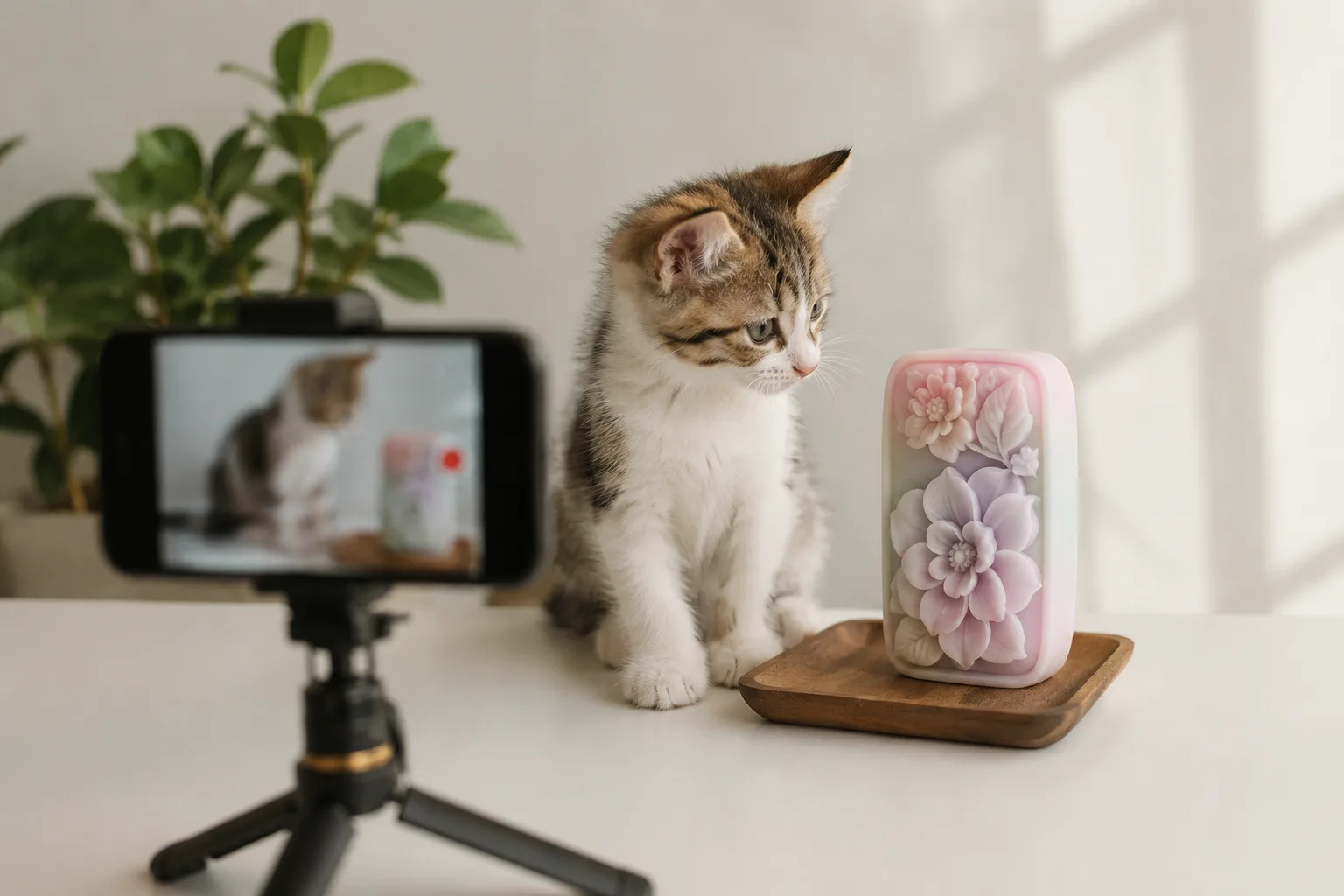
The real safety rule is simple: no animal should be placed in, under, or near a dispenser for the sake of a clip.
For an existing format, the Soap Kitten template provides the trend structure. Use it as a visual preset, not as permission to reproduce a real-world setup. If you need to plan source rights, placement, or final checks first, use the AI video template checklist.
Make the safety boundary visible
The content itself should not normalize an unsafe experiment. Do not show a real kitten being handled, covered in foam, or positioned near a working dispenser. Do not describe practical steps for staging a live-animal version. If a concept only makes sense with an animal in a risky position, it is not a concept to publish.
Use a direct caption such as “AI-generated fictional animation; no animal was used.” This is clearer than a vague wink or a late comment. It also helps viewers distinguish a generated trend clip from footage they could imitate.
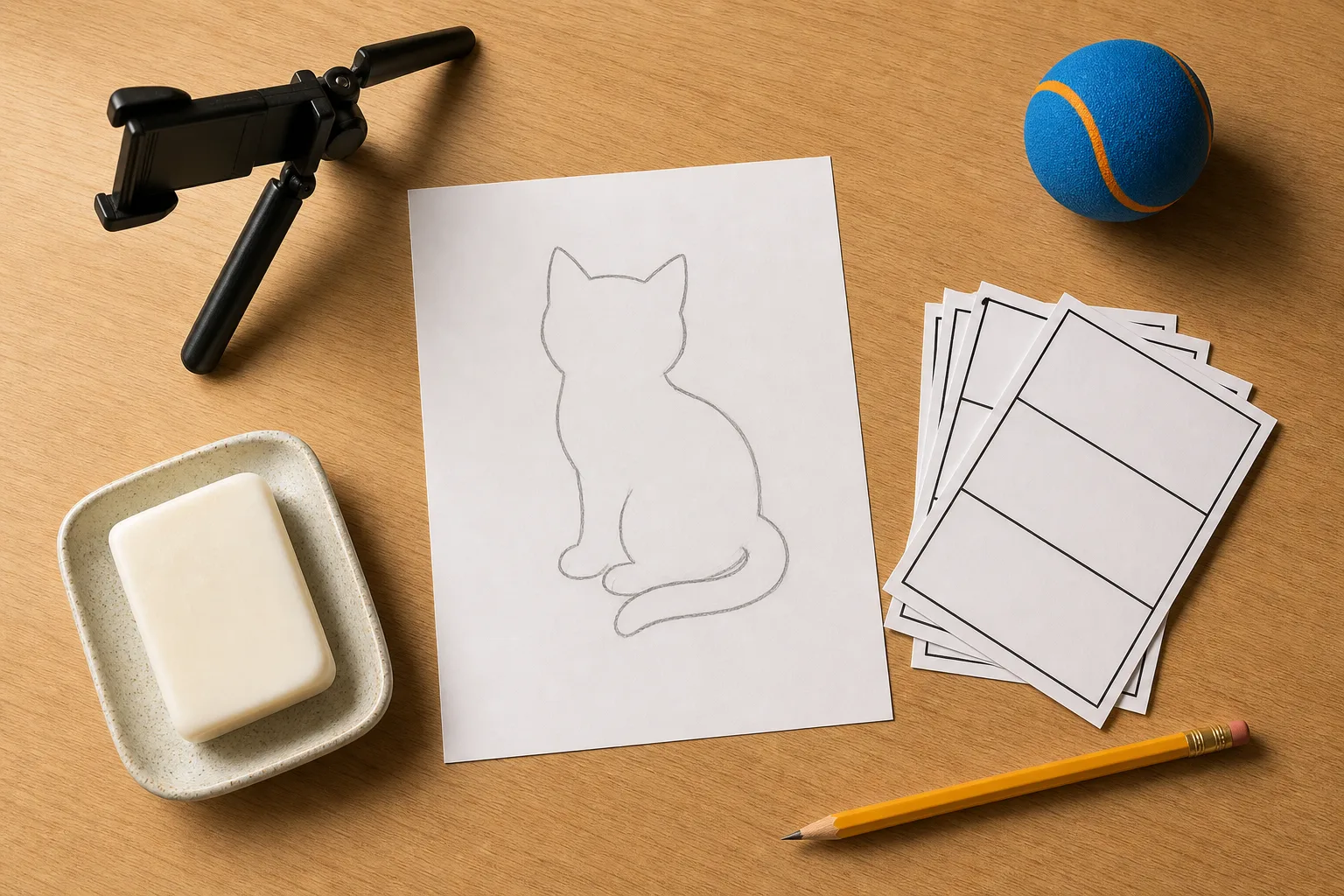
Check the result before posting
Generated media can introduce details you did not ask for. Watch the completed clip and check that it remains clearly fictional and respectful:
- No real animal, animal distress, or unsafe interaction is depicted.
- The reveal is visually impossible enough that the premise is not presented as a real trick.
- The clip has no unapproved logos, labels, or copied creator branding.
- The caption or on-platform disclosure says it is AI-generated.
- The final crop does not hide the context that makes the clip understandable.
If the result looks like real footage or depends on a live animal to sell the joke, choose another idea. A restrained synthetic version is the better creative outcome. The brand-safe AI video review adds a broader rights-and-claims check for public posts.
FAQ
Is the soap kitten AI video trend real?
The trend format is a synthetic visual effect. Treat any version you create or share as AI-generated entertainment, not a real animal interaction.
Should I use a real kitten in a dispenser video?
No. Do not put a real animal in, under, or near a dispenser or prop for content. Keep the concept fully synthetic.
How should I label a soap kitten AI video?
Use a clear caption or the platform's AI-generated-content disclosure. A short statement that no animal was used removes ambiguity for viewers.
Can I add a brand message to the trend?
Add exact brand copy, offers, and legal details in a normal editor after the generated visual has been reviewed. Do not rely on generated frames for text that must be correct.
Keep the surprise fictional and clear
Use the trend for a harmless visual reveal, not a real-world stunt. Start from the Soap Kitten template, keep animals out of the setup, and publish only with clear AI disclosure.