Halloween Party Poster Ideas: 8 Themes and Wording Examples
The most useful Halloween party poster ideas start with the gathering: a haunted-house evening, retro movie night, friendly pumpkin party, neon dance, office social, neighborhood meetup, costume contest, or invitation starring the host. Pick the mood guests should expect, then write the event name, date and time, and location. ClipTrend.ai's Halloween Poster page can turn those three lines into a vertical invitation with an optional portrait. The eight ideas below are editorial concepts; the tool has four style presets.
Ideas and product details as of October 14, 2026 · By the ClipTrend.ai Editorial Team
Disclosure: This guide is published by ClipTrend.ai, which offers the poster generator. Its cover is a conceptual mood board. Wording examples are fictional suggestions, not descriptions of events or results we generated.
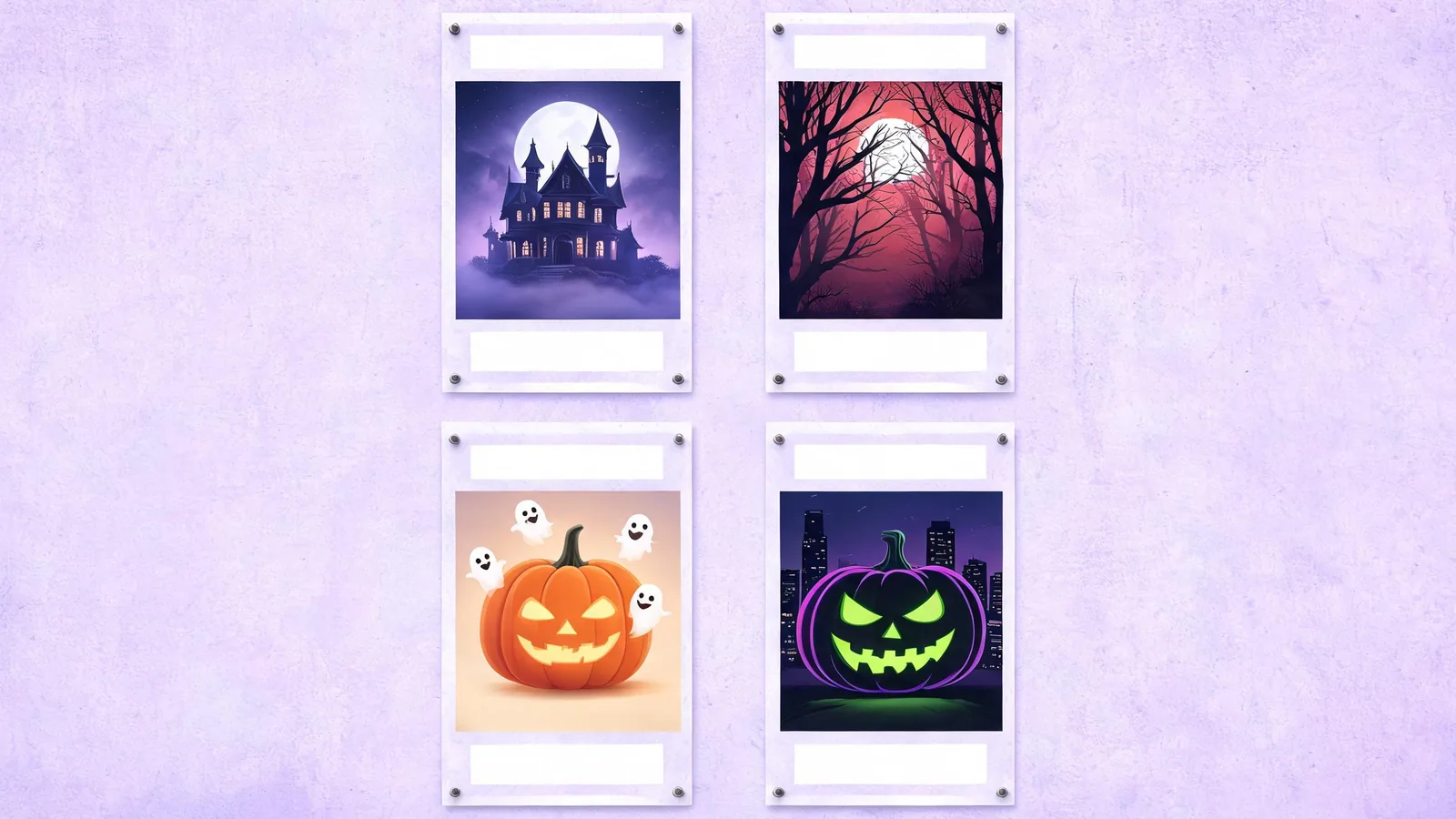
Choose the event promise before the palette
A poster makes a small promise about the party. A smiling pumpkin suggests something gentler than a dark mansion; glowing neon suggests a different evening from an office lunch. Choose art that agrees with the experience you are actually planning. The picture should help guests decide whether the gathering suits them.
As of the date above, the presets are Haunted house, Retro horror, Cute pumpkin, and Neon night. The ideas here map different audiences and activities onto those choices. An office social is an event concept, for example, rather than a fifth preset hidden in the tool.
| Your event | Starting preset | Detail guests most need |
|---|---|---|
| Spooky house gathering | Haunted house | Venue and expected intensity |
| Vintage movie evening | Retro horror | Screening start time |
| Friendly pumpkin afternoon | Cute pumpkin | Age group and adult supervision |
| Costume dance night | Neon night | Hours and admission arrangements |
| Office celebration | Cute pumpkin | Room and costume expectations |
| Neighborhood meetup | Haunted house or Cute pumpkin | Meeting point and audience |
| Costume contest | Retro horror or Neon night | Judging time and entry details |
| Host-portrait invitation | Any of the four | Who is hosting and where |
1. A haunted-house gathering with a clear destination
Use Haunted house for an evening with spooky decoration, a dark palette, and a sense of arrival. The preset's mansion, bats, pumpkins, and fog give the invitation a recognizable Halloween setting. Choose it because that atmosphere suits your guests, not because the event must take place in a mansion.
Try these three lines:
- Title: The Lantern House Gathering
- Date and time: Oct 30, 2026 · 7–10 PM
- Place: Rowan Hall · Spooky costumes welcome
The place line grounds the fanciful title in a real destination. Keep the elaborate story of the haunted house for the accompanying invitation message. Tell guests there whether the event includes jump scares, a guided activity, or simply themed decorations. A dark poster cannot communicate those distinctions reliably.
2. A retro horror night for film-loving friends
Retro horror uses a red-and-black palette, forest and moon imagery, and worn-paper texture. It gives a movie evening a vintage direction without needing a recognizable film poster or a borrowed actor's face.
Use a title that announces the activity:
- Title: The Late-Night Creature Feature
- Date and time: Oct 24, 2026 · Film starts 8 PM
- Place: Willow Lounge · Bring a cushion
The start time does more work here than a vague “from eight” label. Guests need to know whether arriving later means missing the film. Put the actual film choice, age suitability, and food plans in the message. Do not imply a particular movie, celebrity appearance, or official screening arrangement that you have not organized.
3. A friendly pumpkin party with a gentle tone
For a children's afternoon or a family gathering, start with Cute pumpkin. Its smiling pumpkins, friendly ghosts, candy, and rounded lettering support a playful invitation. You can keep the poster photo-free so the event, rather than a child's portrait, remains the focus.
One wording direction is:
- Title: Pumpkin Patch Play Afternoon
- Date and time: Oct 25, 2026 · 2–4 PM
- Place: Maple Community Room · Families welcome
“Families welcome” describes the audience; it does not explain supervision. Add a plain note outside the picture saying whether adults stay, which ages the activities suit, and how to reply. If there will be no frightening activities, say that in words. Friendly artwork is a useful cue, but parents still need practical information.
4. A neon dance night with practical hours
Choose Neon night when the evening centers on music, dancing, and bright costume color. Purple, green, and orange glow against a dark city background, giving the invitation a different energy from the vintage film idea.
Keep the main wording direct:
- Title: Glow After Dark Costume Dance
- Date and time: Oct 31, 2026 · 9 PM–midnight
- Place: Violet Studio · Costumes encouraged
Explain any age restriction, entry charge, RSVP requirement, or travel information in the accompanying text. Do not let the neon look imply a nightclub, a licensed bar, or a booked performer if this is simply a dance at a hired studio. Accurate details make the image more useful than a dramatic promise you cannot deliver.
5. An office social that leaves room for everyone
An office invitation can be seasonal without demanding elaborate costumes. Cute pumpkin is a straightforward starting point for a lunch or informal break-room gathering, particularly when colleagues have different levels of interest in Halloween.
For example:
- Title: Pumpkin Break at the Office
- Date and time: Oct 29, 2026 · 12:30–1:30 PM
- Place: Meeting Room 2 · Costumes optional
Include the room rather than assuming everyone knows where the event happens. For a hybrid team, send online participation details separately if you have arranged them. Avoid uploading a colleague's portrait just to make the poster livelier; use the illustrated version unless the person agreed to the portrayal and distribution.
The word “optional” is useful when it reflects the organizer's actual policy. It gives someone arriving in normal work clothes a clear expectation, rather than leaving them to interpret a picture of dressed-up characters.
6. A neighborhood meetup built around the meeting point
Choose Cute pumpkin for a family meetup, or Haunted house for an older audience expecting a spooky evening. The key design decision is how easily a neighbor can find the gathering from the location line.
Here is a family-oriented option:
- Title: Lanterns on Linden Lane
- Date and time: Oct 31, 2026 · Meet at 5:30 PM
- Place: Linden Park gate · Neighbors welcome
Use a meeting point that residents can identify, and add directions for newcomers in the message. If the group will move elsewhere, tell people where it starts and what happens afterward. Confirm permission before posting notices on shared boards or public property; the image itself does not grant access to a venue.
For a poster distributed beyond a private chat, prefer a public gathering point over someone's home address. That decision is about the audience and the organizer's wishes, not the visual style.
7. A costume contest that tells guests when to arrive
A contest needs more than a dramatic costume illustration. Guests should know when the entries or judging happen. Retro horror can suit theatrical looks, while Neon night can work for a lively stage or dance-floor event.
Try:
- Title: The Midnight Mask Costume Contest
- Date and time: Oct 31, 2026 · Judging at 8:30 PM
- Place: Elm Hall · Entry details in invitation
Keep judging categories, any entry deadline, age groups, and confirmed prizes in the full invitation. Do not put a prize into the title unless it is settled. A poster that says when judging begins gives entrants something concrete to plan around.
If guests are still choosing outfits, Halloween costume ideas offers directions to consider. The poster and the dress code should agree: an open costume contest should not accidentally appear limited to vampires because the artwork features one.
8. A personal invitation starring the host
For a small party among friends, a host portrait can make the invitation recognizable. Pick any of the four styles to match the evening, then use an agreed portrait and one of the available costumes: Witch, Vampire, Skeleton, Ghost, Pirate, or Pumpkin.
One personal wording example is:
- Title: Avery's Halloween Open House
- Date and time: Oct 31, 2026 · Drop in 6–9 PM
- Place: Address shared with confirmed guests
This wording keeps the exact address out of a potentially forwarded image. Use it only if you will send the address to the intended guests through another channel. A portrait is optional, and an illustrated invitation remains a good choice if the host would rather stay out of the artwork.
The feature page's own retro-horror vampire and neon skeleton-host demos show how a portrait can sit within the poster. They are format references, not a guarantee that another person's face will be preserved perfectly. Ask the depicted person to approve the finished portrayal before sharing it.
Keep the theme playful and the details literal
Use the title for personality and the other lines for logistics. The tool allows 40 characters for the title and 60 each for the date/time and place/extra line. Every suggested line above fits within those limits, but replace the fictional details and recheck the length after editing.
Jotform's Halloween invitation guide makes the practical point that guests need explicit timing, location, and costume expectations. For this compact format, send RSVP instructions, food notes, directions, and longer rules as normal text alongside the poster. That also gives guests information they can copy or read without opening the image.
If you have chosen a concept and need the actual form sequence, the Halloween poster maker guide covers the fields, optional photo, proofreading, and download. Keep essential wording short, check every generated letter, and test a small print before making a batch. The 2:3, 1K output suits digital sharing and small invitations; it should not be assumed to produce a sharp large wall poster.
FAQ
Are these eight ideas eight presets in the generator?
No. They are eight event concepts and wording directions. The available presets are Haunted house, Retro horror, Cute pumpkin, and Neon night. Several event types can use the same preset with different text and an optional portrait.
Which theme works for both children and adults?
Cute pumpkin is a friendly starting point for a mixed-age gathering. Specify the audience and explain supervision, activities, and costume expectations in the accompanying message. A gentle illustration alone does not establish that every planned activity suits children.
What belongs on a costume-contest poster?
Put the event name, judging or arrival time, and venue on the poster. Send the categories, entry procedure, eligibility, and confirmed prizes in the full invitation. Avoid making a prize or activity promise before the organizer has confirmed it.
Can I use a host portrait without putting a home address on it?
Yes. The portrait and the place line are separate choices. With the person's agreement, use a portrait and write that the address will be shared with confirmed guests. Send those guests the real directions separately so the invitation remains actionable.
Pick one idea and make it your own
Choose the event promise, adapt three short lines, and confirm that the details are accurate. Then make a Halloween party poster in the matching style and review it before sending. More creative tools are available from ClipTrend.ai.