AI Fitness Influencer: What It Is and Honest Uses
An AI fitness influencer can mean a virtual fitness-themed persona or a real person shown in AI-created fitness imagery. ClipTrend.ai’s Fitness Influencer page offers the latter: it turns an uploaded adult selfie into fitness-style photos, with optional five-second video. It does not create an autonomous influencer, manage a social account, or provide fitness advice. The images can support creative planning and disclosed profile visuals; they cannot establish someone’s workouts, qualifications, or physical results.
Updated October 14, 2026 · By the ClipTrend.ai Editorial Team
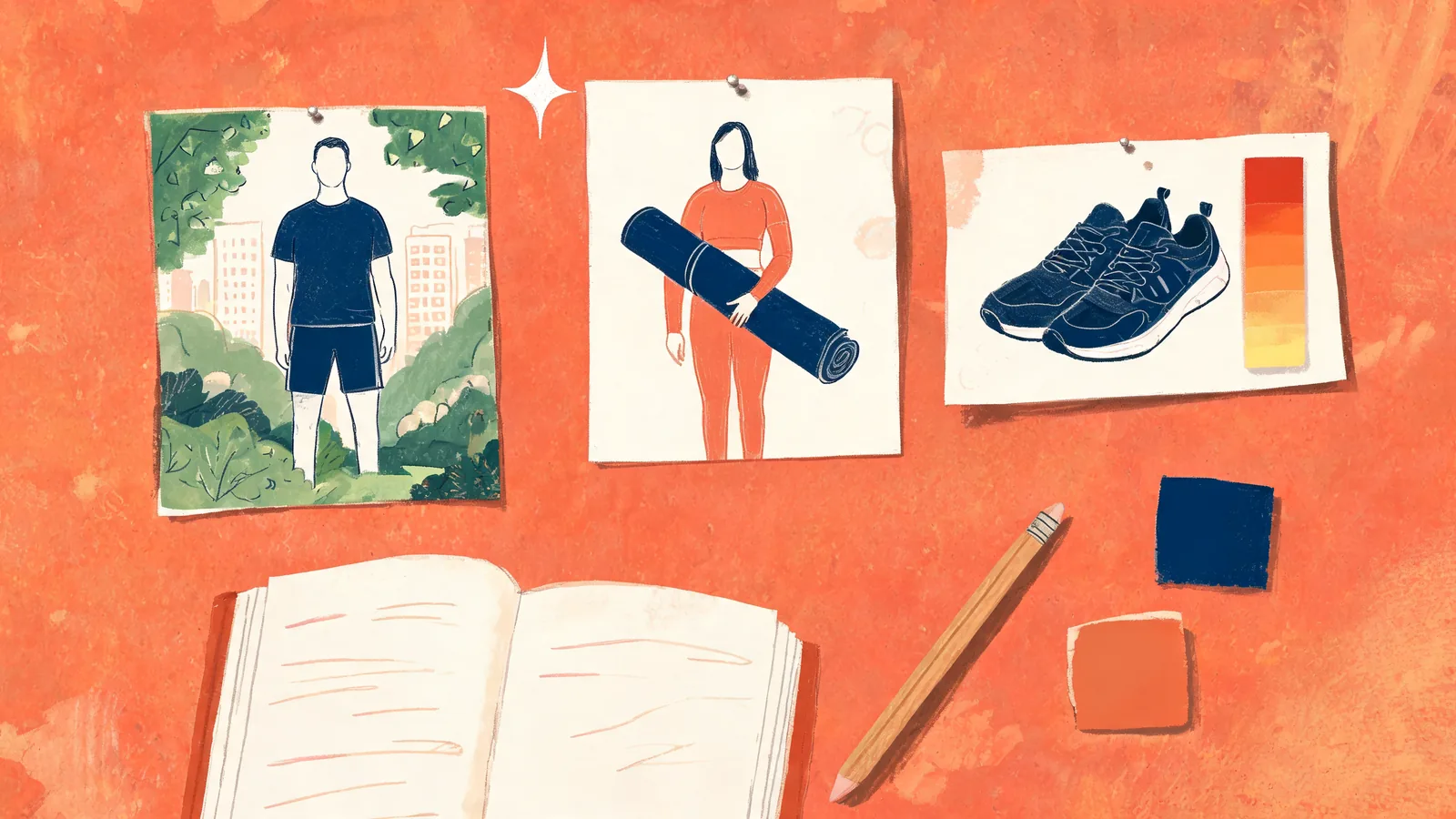
Disclosure: ClipTrend.ai offers the photo tool discussed here. The cover is an illustrated mood board, not a generated customer example or a fitness testimonial.
Two meanings behind the same phrase
The phrase mixes a person’s public role with the way an image was made. In the broader sense, an AI influencer is a digital persona presented through pictures, videos, captions, and a recurring identity. A fitness-themed version might have an invented style, personality, and content concept. People still decide what it says and publishes; a realistic picture alone does not establish independent judgment or expertise.
Adobe’s overview of AI influencers describes digitally created personalities used in social media and brand storytelling. That is a wider concept than a photo editor. It helps explain why someone looking for an “AI fitness influencer” might expect an entire fictional account rather than one portrait.
The other meaning is simpler: a real person uses AI to picture themselves in a fitness scene. The selfie supplies the identity; the scene, clothing, and pose may be synthetic. A gym mirror portrait can look photographic while depicting a workout location the person never entered.
ClipTrend.ai serves this second use. Calling the page Fitness Influencer describes the visual style. It does not turn the pictured person into a trainer, create followers, write their story, or establish an account’s credibility. Those are separate decisions and responsibilities.
What the selfie-based studio offers today
As of October 14, 2026, the studio accepts a selfie of one adult and offers eight photo choices: gym mirror selfie, activewear in the city, a bodybuilding-style Physique pose, sunrise run, yoga and pilates studio, home workout, post-workout shake, and beach fitness. Describe it lets you request a different sports scene or location in your own words.
The resulting photo is 4:5, and the finished still can become an optional five-second video. The page’s demo shows a balcony selfie becoming a gym mirror portrait and then a clip. It illustrates the photo-to-scene idea without requiring a gym photoshoot as the starting point.
The studio aims to retain the uploaded person’s recognizable appearance. Results still need review, especially where the face, body, hands, equipment, or background matter to the message. A recognizable face does not mean the rest of the picture is a real event.
For the practical upload and shot-selection workflow, see our one-selfie fitness photo guide. Here, the more useful question is whether an AI visual belongs in the content you want to make.
Where an AI fitness visual can be useful
Mood boards before a real shoot
Suppose you are deciding whether a new account should feel like an urban activewear journal or a quieter outdoor routine. Concept images can help you compare locations, light, and clothing colors before arranging a shoot. Keep them on a planning board and explain that they are imagined scenes if you share the board with collaborators.
That use is about choosing a visual direction. It does not require pretending the scene happened. A photographer can respond to “I like this warm outdoor palette” without assuming the picture records a real morning run.
Content ideas without an invented diary
A creator might use a home-workout concept to plan a post about organizing a small exercise space. The image can accompany a discussion of future ideas, provided the caption separates the concept from anything the creator actually did.
Avoid giving synthetic scenes dates, distances, or achievements that imply a recorded activity. “Thinking about a calmer home-workout theme” describes an intention. “Finished this session today” describes an event and needs to be true independently of the image.
Profile visuals with an explicit visual style
An AI portrait can support a profile that openly uses imagined fitness imagery. A clear bio helps explain the account’s format, while an individual post still needs enough context to stand on its own when someone sees it outside the profile.
A beginner’s account can be about exploring visual ideas and sharing real experiences separately. It does not need an invented coaching credential or a competition history to justify its existence. The useful promise to an audience is clarity about which material is creative and which comes from lived experience.
Choose the right kind of image for the claim
| What the post communicates | A suitable role for an AI picture | What needs real evidence |
|---|---|---|
| A possible visual direction | Labeled mood board or concept portrait | No claim that the shoot already happened |
| Your personal introduction | Disclosed stylized portrait | Your own accurate biography |
| A workout you completed | A clearly separate decorative concept | A truthful account of the actual session |
| How to perform an exercise | Background illustration at most | Qualified instruction and an accurate demonstration |
| A supplement or clothing review | An identified creative scene | Real use, accurate product details, and truthful opinions |
| A physical transformation | No substitute for progress documentation | Authentic records and supported claims |
Ask what someone would believe after seeing the image and caption together. A bottle in a generated kitchen might look like an endorsement even if no brand is visible. A stage pose can imply a competition. An invented exercise setting can resemble a training demonstration. Changing the caption is useful only if the combined message becomes accurate.
Disclosure should describe what was made
Start with language a viewer can understand: “AI-created sports portrait using my selfie” or “Imagined fitness scene for a mood board.” If the body, location, or activity has been changed, a vague phrase such as “a little edited” understates what the image represents.
As of October 14, 2026, TikTok’s guidance on AI-generated content says realistic AI-generated images, audio, and video need a label. Check the platform’s current publishing controls before sharing. An account biography alone may not reach someone who encounters a single post.
AI disclosure and advertising disclosure answer different questions. One explains the image’s origin; the other explains a commercial relationship. Do not assume “AI-made” tells someone whether a brand paid you, gave you something, or approved a testimonial. If you plan sponsored content, check the rules that apply to that arrangement and keep the underlying claims truthful.
The pictured person remains part of the decision
Use photos only of adults who agreed to appear in this kind of result. A collaborator needs to understand more than the fact that you are “editing a selfie.” Explain the sportswear, synthetic setting, possible pose and physique changes, and where you intend to publish.
Give the person a chance to reject the finished image. They may recognize their face while disliking the presentation. That matters, whether the picture is intended for a private planning board or a public profile. Our source-photo permission checklist gives a starting point for discussing image use.
Avoid treating body types as a ranking. These pictures are a creative representation, not a measurement of health, effort, or worth. A generated athletic appearance tells the audience nothing reliable about the person’s fitness level.
FAQ
Does an AI fitness influencer run its own account?
The term can describe a virtual persona, but a picture does not make that persona autonomous. ClipTrend.ai’s tool makes selfie-based photos and optional short clips. It does not manage accounts, post content, reply to followers, or make business decisions.
Can an AI portrait establish fitness expertise?
No. A sports outfit, gym background, or athletic-looking body is not a qualification. Use accurate biographies and real evidence for credentials, instruction, or performance claims; do not infer expertise from generated appearance.
Is it misleading to use an AI fitness profile photo?
Context matters. A clearly disclosed creative portrait can communicate an aesthetic. It becomes misleading if the surrounding text presents its invented scene or physique as a real achievement, experience, endorsement, or professional credential.
Is a fictional fitness persona the same as editing my selfie?
No. A fictional persona is an invented identity with its own presentation and story. A selfie-based image starts from a real person’s likeness and changes the visual setting. ClipTrend.ai’s Fitness Influencer studio offers the selfie-based approach.
Decide what you want the image to represent
If you need a creative portrait or planning visual, explore the Fitness Influencer studio. Keep the image’s role clear, involve the pictured adult in the decision, and let real experience carry any claim about training or results. You can browse other photo and video workflows on ClipTrend.ai.