AI Fashion Influencer: Outfit Photos Without a Shoot
An AI fashion influencer can mean a fictional digital fashion personality or AI-made fashion imagery featuring a real person. ClipTrend.ai’s Fashion Influencer studio offers the second workflow: one adult selfie becomes an outfit photo using a preset or your description. As of October 14, 2026, it has eight looks, 4:5 photos, and optional five-second video. It makes styling concepts; it does not create an autonomous social account or prove how clothes fit.
Updated October 14, 2026 · By the ClipTrend.ai Editorial Team
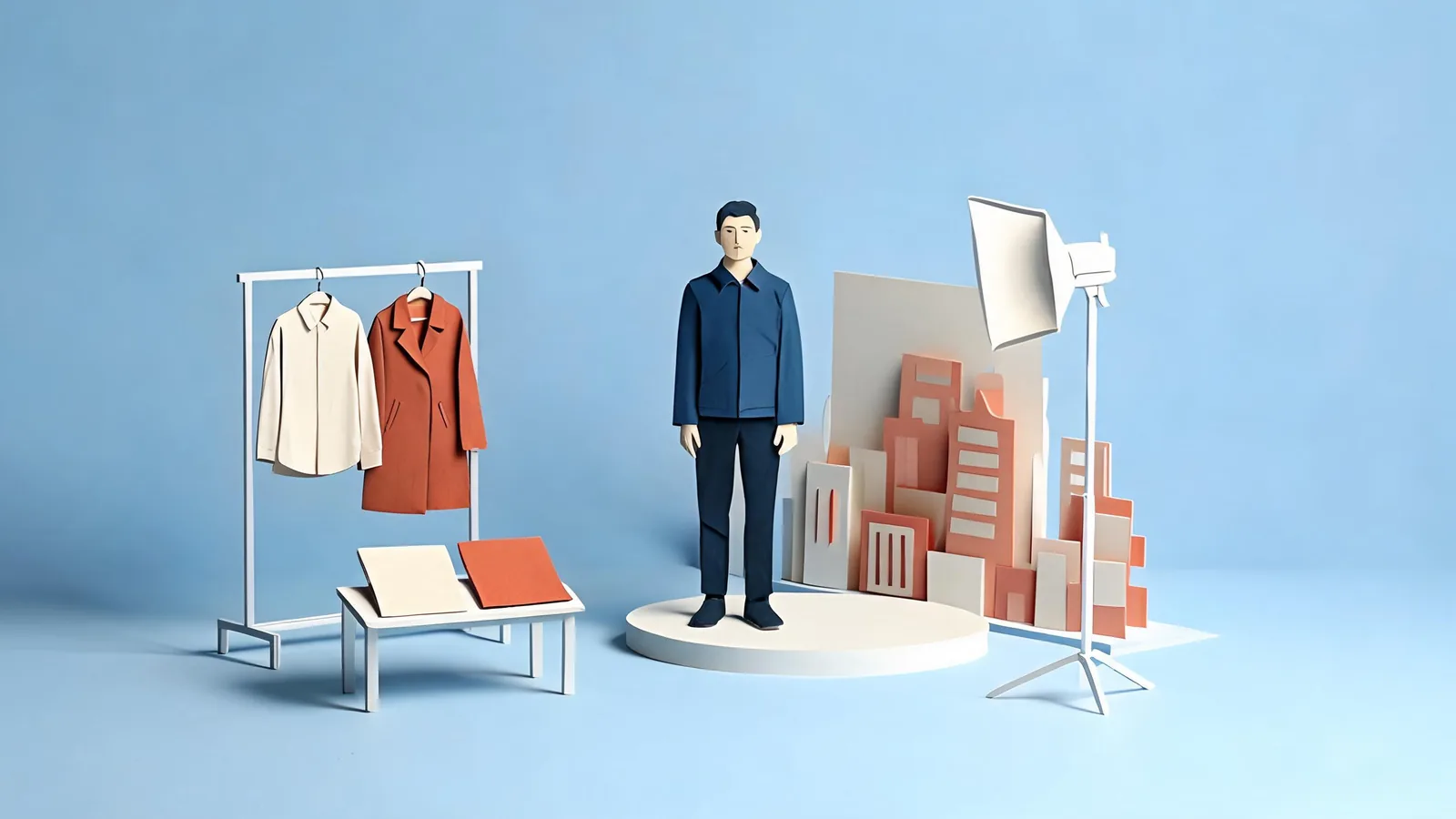
About this article: The ClipTrend.ai editorial team explains our selfie-based fashion studio. The illustrated cover depicts an imaginary set; it was made with AI and is separate from the studio’s own demo.
One term, two different kinds of fashion content
A fictional virtual influencer has an invented identity. Someone designs the character’s appearance, gives the account a voice, and decides which images or stories to publish. The character may look photographic, but there is no corresponding person attending every depicted event.
Selfie-based fashion imagery starts somewhere else: a photograph of an actual person. A tool uses that reference to imagine clothes, lighting, and surroundings. The person exists; the depicted outfit or scene may not. That distinction matters when deciding what the picture can honestly represent.
Adobe’s guide to AI influencers describes virtual personalities and the work involved in building their identity and content. It is useful background for the broader term. A single outfit image of yourself is a narrower creative task than developing a fictional persona and running its account.
ClipTrend.ai’s fashion page is a selfie-based studio. You choose a look or describe an outfit, then review the generated picture. It does not supply follower relationships, personal experience, an endorsement, or a posting strategy. Those depend on what a human chooses to do with the image.
What happens between the selfie and the outfit photo?
The source selfie provides a reference for the person’s appearance. The selected preset or text description supplies a styling direction. The output is a new depiction that combines the person with imagined clothing and a scene. A photo-like surface should not be confused with a photograph of an event that took place.
Think of it as a visual proposal. “Would a dark tailored silhouette work against a simple grey background?” is a question a concept picture can help you explore. “Does this exact jacket fit my shoulders?” requires information about a physical garment and body measurements that this picture cannot establish.
The studio aims to keep the uploaded person recognizable. You still need to compare the output with the original, including facial features, age, hair, skin tone, and body representation. If an image changes something important or makes the person uncomfortable, do not use it merely because the overall styling looks polished.
The page’s own input-and-result demo illustrates its intended workflow: an ordinary selfie becomes an imagined outdoor fashion scene, with an optional short clip. Use that demo as an introduction to the tool. This article does not claim to show a personal test or measured performance results.
Useful situations for selfie-based fashion concepts
Exploring your wardrobe direction
You may know which colors you like but find it hard to picture them together. A description such as “navy overshirt, pale grey tee, relaxed dark trousers, plain courtyard” gives the idea a visual form. You can decide whether you want to explore that palette in your actual wardrobe.
Use the image to identify a direction, then look for real pieces that suit your needs. An appealing generated fabric texture is not a material specification, and a flattering silhouette does not establish comfort. The concept can inform the next question; it cannot finish the shopping decision for you.
Planning the look of a personal style account
A creator may want to compare understated studio imagery with colorful retro scenes before arranging a real shoot. Concept pictures can help explain the mood to a photographer or to the adult who will appear in the final photographs.
Keep the brief separate from the finished evidence. A generated backdrop might suggest where to shoot, but it does not mean you visited that place. If you share the planning images publicly, describe them as concepts. Do not attach an invented personal story simply to make the picture feel more authentic.
Making a clearly labeled creative post
Some posts are about imagined style rather than documenting a day. You might ask readers which of two color combinations they prefer, with a caption explaining that the pictures are AI-made. Their opinions can be about the visual idea without anyone assuming you wore every item shown.
Choose a question the image can answer. “Which palette feels calmer?” fits concept imagery. “Which garment is better quality?” does not, because the picture supplies no reliable evidence about manufacturing, fabric, or durability.
Communicating a styling brief to another adult
A visual concept can support a conversation about outfits and surroundings. Agree on the person’s participation before uploading their photo, and let them review how they are represented before anything is published.
Avoid treating consent as a one-time checkbox with unlimited uses. A person may agree to a private wardrobe exercise but decline a public promotional post. Confirm the intended use and keep the discussion grounded in the actual picture you plan to share.
When a real photograph or try-on is the better choice
| Your question | What a generated concept can contribute | What you still need |
|---|---|---|
| Which colors might work together? | A visual starting point | Real fabric colors under ordinary light |
| Do I like a relaxed or tailored silhouette? | A rough styling comparison | A physical try-on for fit and comfort |
| Does this exact garment match its listing? | An imagined outfit direction | Actual product photographs and specifications |
| What did I wear to an event? | An alternative creative depiction | A real photo or an accurate personal account |
| Is this product worth recommending? | A possible visual theme | Real use and an honest assessment |
Use real photographs when the post’s value comes from experience: how a coat feels in rain, whether shoes stayed comfortable, or what you wore on a trip. A generated image cannot supply that experience, even if it looks convincing.
What the live studio offers
The page has eight preset looks: Street style, OOTD mirror selfie, Runway walk, Cafe lifestyle, Editorial studio, Vintage thrift look, Luxury shopping street, and Minimalist neutrals. They offer different visual settings and degrees of formality around one uploaded person.
Describe it lets you specify an unbranded outfit and setting in words. For example, you could describe a pale blue shirt with navy trousers in a quiet indoor gallery. That is an input idea, not a claim about a generated result. Keep the description under 400 characters and emphasize the pieces that matter to you.
The photo output is 4:5, and a five-second video is optional after the still. The page does not provide garment uploads, exact item matching, automatic multi-image lookbook assembly, or social account management. Reusing a selfie lets you pursue a coordinated set, but separate outputs still need a consistency check.
For a practical sequence covering source selection, review, and captions, use the fashion influencer photos tutorial. Other image and video workflows are available through ClipTrend.ai’s homepage.
Disclosure should explain what the picture represents
A useful disclosure tells readers what was invented. “AI-made styling concept based on my selfie” distinguishes the real person from the imagined outfit and setting. If the image is part of a planning exercise, say that too. Clear context is easier to understand than a vague tag separated from the post.
Avoid captions that imply an actual runway appearance, shopping trip, or visit when none occurred. Labeling the image does not make a false personal account accurate. If you want to discuss a real experience, pair your words with real evidence of that experience.
Still images need attention as well as moving clips. TikTok’s official guidance, consulted October 14, 2026, includes realistic AI-made pictures in its labeling requirement alongside audio and video. Read the rules of your chosen publishing service and use its disclosure controls where required.
Review the image itself as well as the caption. Unexpected logos, altered faces, or an inappropriate setting may create problems that a label cannot solve. Use adults only, obtain their agreement, and reject depictions that misrepresent them or make them uncomfortable.
A simple way to decide whether to use it
Ask yourself what a reader would reasonably infer from the image. If the answer is “this is an imagined outfit idea,” a generated concept may serve the purpose. If the answer is “this person wore this exact item and recommends it from experience,” the picture needs evidence it cannot provide on its own.
Then ask whether you need the extra realism. A sketch, flat lay, or written list may communicate a palette just as well. Selfie-based imagery is most useful when seeing the overall styling around your own appearance helps you make a creative decision.
Start with a private concept, review it, and decide whether it is suitable to share. You retain responsibility for the story attached to the picture. The tool can supply imagery; it cannot decide which claims about your life are true.
Frequently asked questions
Is an AI fashion influencer always a fictional person?
No. The phrase also describes AI-made fashion imagery featuring a real person. A virtual persona has an invented identity, while ClipTrend.ai’s workflow starts from a selfie supplied by an adult who agreed to appear.
Does an outfit image create an influencer account for me?
No. The studio generates imagery. You still choose your content, write accurate captions, publish it, and interact with readers yourself. A generated photo does not establish an audience or an endorsement.
Can I use the pictures to decide my clothing size?
No. A generated image does not measure your body or verify a garment’s sizing, construction, or fit. Use actual measurements, product information, and a real try-on when deciding which size to buy.
Does the optional video show real fabric movement?
It is an AI-made animation of the concept, not a physical test of a garment. Review the whole five-second clip for visual consistency and do not use its motion as proof of how an item behaves in real life.
Explore a style idea with clear expectations
Open the Fashion Influencer studio with one agreed adult selfie and one outfit question. Treat the result as a styling concept, check how the person is represented, and describe the image honestly if you share it.