Pirate Costume Ideas: 7 Looks to Preview Before Halloween
The easiest pirate costume ideas start with a loose shirt, dark trousers or a skirt, a sash, and one nautical detail. Add a long coat and tricorn hat for a captain, keep a striped shirt for a deckhand, or coordinate scarves for a couple. Before choosing pieces, you can preview a costume direction on your own photo in ClipTrend.ai's AI Pirate studio. Here are seven looks organized around what you wear and what you need to prepare.
Updated October 12, 2026 · By the ClipTrend.ai Editorial Team
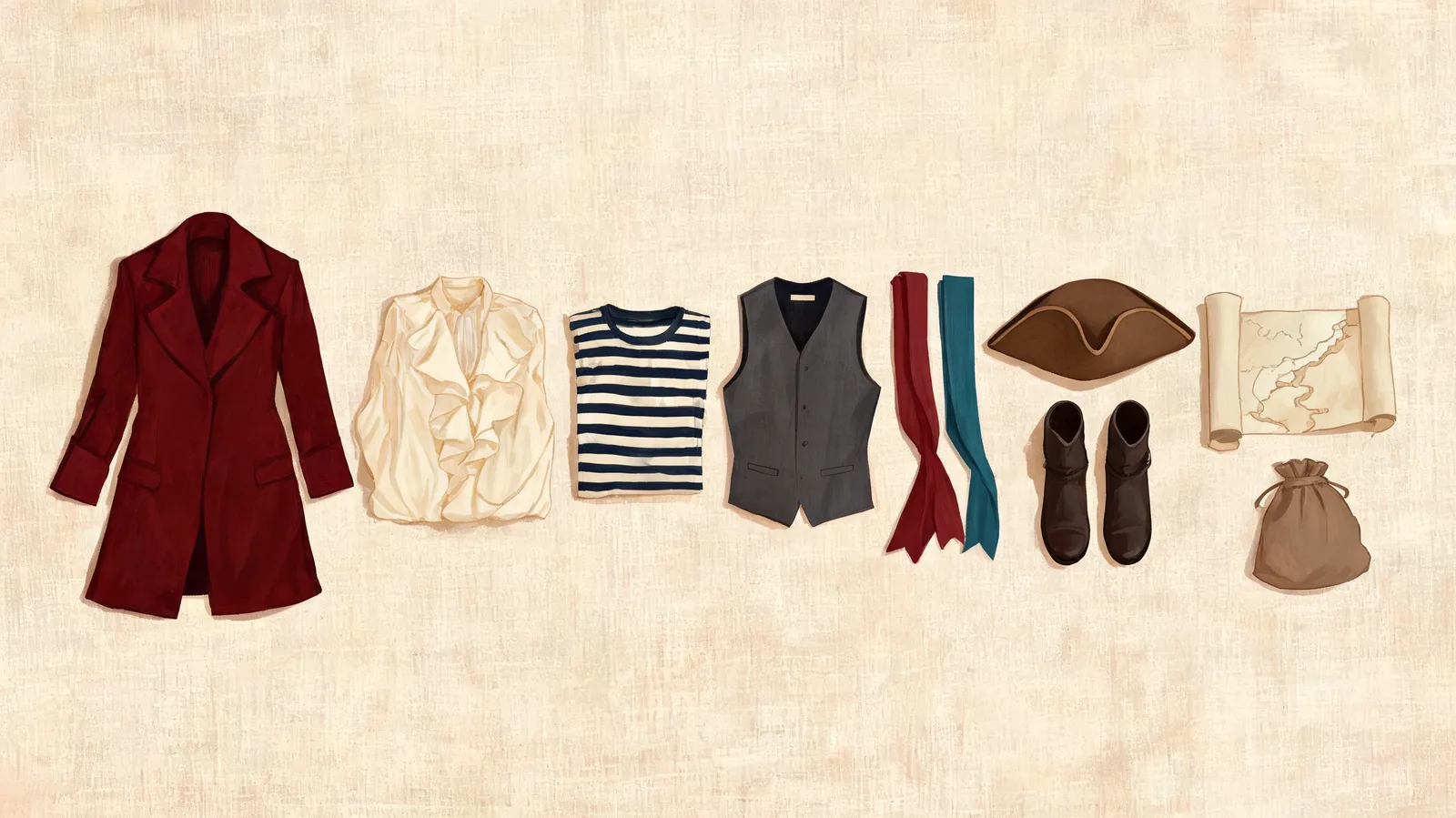
Disclosure: ClipTrend.ai offers the preview tool mentioned here. The cover is an editorial wardrobe illustration; it does not show products for sale or a studio-generated result.
Choose the look by your wardrobe and plans
Start with the pieces you already own, then decide which single addition changes the outfit most. A coat makes a captain; a map suggests a navigator; matching sash colors connect a pair. You do not need every familiar pirate accessory at once.
| Look | Clothing to start with | Defining addition | Preparation |
|---|---|---|---|
| Classic captain | Loose cream shirt, dark lower layer | Long coat and tricorn | Find or borrow structured outerwear |
| Ghost-ship captain | Muted shirt, vest, weathered coat | Faded palette and theatrical lighting | Coordinate layers and a photo setting |
| Deckhand | Striped shirt, dark trousers | Bandana and sash | Mostly wardrobe assembly |
| Navigator | Plain shirt, waistcoat or vest | Rolled paper map | Make one simple prop |
| Treasure hunter | Relaxed shirt, trousers, belt | Fabric treasure pouch | Choose practical layers |
| Pirate couple | Two related shirt-and-vest outfits | Shared color, different roles | Agree on the pair together |
| Budget DIY pirate | Everyday shirt and dark clothes | Scarf at the waist | Reuse pieces without sewing |
These are theatrical Halloween directions, not historical reconstructions. The studio's default pirate and ghost-pirate couple looks are presets; the other directions need a costume reference or description if you want to preview them there.
1. Classic captain: let the coat do the work
Build around a cream shirt, dark trousers or a full skirt, and a long navy, burgundy, or brown coat. Add a wide fabric sash and a tricorn hat. Keep the shirt simple if the coat already has noticeable buttons, cuffs, or trim.
The coat gives this outfit its shape, so try it over your base layers before choosing accessories. Can you sit comfortably? Can you raise your arms? A coat that looks dramatic in a portrait may be awkward at a crowded party.
A rolled map is enough of a prop. Use comfortable shoes you can walk in rather than selecting footwear only for its silhouette. This is a good direction when you want a clearly recognizable captain without a specific movie character.
2. Ghost-ship captain: change the atmosphere
Use charcoal, dusty blue, ivory, and weathered brown for a quieter version of the captain. Layer a vest under an open coat, then add a faded scarf. Soft fabric and muted colors carry the ghostly theme without torn clothing or gore.
For a photograph, cool lighting and a misty-looking background can supply the supernatural mood. Those effects are styling ideas, not requirements for the real outfit. Do not expect a generated sea-green glow to translate into something you can wear.
This is the closest match to the studio's solo Pirate preset: a weathered long coat, tricorn, prop cutlass, faint sea-green glow, and foggy moonlit deck. Look at the page's own demo for that visual direction. If you prefer to avoid a weapon prop in your physical outfit, carry a map or pouch instead.
3. Deckhand: lighter layers for an active evening
A striped shirt, plain dark trousers, and a bandana make a simple deckhand. Add a sash if the waist needs definition; a short vest is optional. You can skip the captain's coat and still keep a clear pirate theme.
Choose sleeves and trouser hems that stay out of your way. The outfit should work when you move, not just while you stand for a photograph. A fabric pouch can hold small essentials without introducing another large prop.
For a crew, deckhands can share one scarf color while wearing different base clothes. The captain's longer outer layer then stands apart naturally. To preview this simpler look, describe the striped shirt and bandana rather than leave the ghost-captain preset unchanged.
4. Navigator: a map gives the outfit a role
Pair a plain shirt with a vest or waistcoat, dark trousers, and a sash. The defining piece is a paper chart or rolled map. Draw an imaginary coastline and a few landmarks; it does not need detailed lettering to communicate the idea.
Keep the prop small enough to carry without blocking your hands all evening. A lightweight cardboard telescope is another option, but one prop is usually easier to manage than several. The navigator works well next to a captain because their clothes can share colors while their accessories tell different stories.
When writing a preview description, specify an open face and a simple rolled chart. Inspect the generated map as a decorative object, not a usable route. Small markings and writing are details to check rather than evidence of accuracy.
5. Treasure hunter: useful pockets, fewer ornaments
Choose a relaxed shirt, trousers or a skirt you can move in, a belt, and a small fabric pouch. Earth tones keep the outfit coordinated without elaborate trim. Add a bandana or neck scarf as the pirate cue.
This direction suits someone who wants the adventure theme without a large hat or long coat. Use a paper treasure token or lightweight imitation coins for a photograph if you want a prop, but leave unnecessary objects at home for a busy event.
For a custom preview, describe practical layers and the pouch clearly. It helps to decide whether the picture is meant to be a close portrait or a clothing reference: a tightly cropped face cannot show the full outfit's proportions.
6. Pirate couple: coordinate one thing, vary the roles
Pick one shared feature first: burgundy scarves, brass-colored accents, or navy outerwear. Then give each person a different role. A captain and navigator can share a palette without wearing matching coats; two deckhands can use similar shirts with different bandanas.
Each person should choose layers they are comfortable wearing. Coordination is easier when it comes from color and texture rather than forcing both people into the same silhouette. For more pairing questions beyond pirates, see couples Halloween costume ideas.
The studio's ghost-pirate couple preset is one defined pairing. Other captain-and-navigator combinations need a reference or description. Use one clear front-facing photograph per person, and ask each person to approve their own face in the finished preview.
7. Budget DIY pirate: stop after the essentials
Use a loose white or striped shirt, dark trousers or a skirt, and a scarf tied at the waist. Add another scarf as a head covering if you like. A plain belt and familiar shoes complete an outfit you can assemble without sewing.
Lay everything out before buying an accessory. If it already reads as pirate, you may only need a paper map. SEA LIFE Orlando's DIY costume guide also starts with everyday clothing and simple accessories. Its family examples are useful if you are adapting the theme for a crew.
For a hands-on vest project, this video shows Larp Shire turning an old shirt into a pirate vest.
Preview your choice before committing to pieces
As of October 12, 2026, AI Pirate opens with the Pirate preset selected. Upload a clear selfie, or switch to two-person mode and add a separate photo for each person. Use only photographs of yourself or people who agreed to appear.
Keep the default for a ghost captain. For the other ideas above, upload a costume reference or describe the clothing, palette, and setting. The studio also has 12 solo and 12 couple presets if you want to compare a different costume theme. The intended result keeps the face recognizable; it is a costume transformation, not face swapping. Avoid gore and sexualized directions.
Photo generation is described as taking about a minute, with timing that can vary. Review the face and clothing before saving it. A preview helps with visual direction; it cannot measure garment fit, fabric comfort, or how real pieces move. For the full upload-to-download process, follow the AI pirate photo tutorial.
An optional five-second vertical video offers Standard 480p or HD 768p with sound. You do not need animation to compare costumes. Check the current credits beside the selected Generate button if you continue.
Check the physical outfit separately
Walk, sit, and check the length of scarves and hems. Choose soft or lightweight props and follow the venue's rules. Health Canada's Halloween safety guidance recommends keeping costume lengths from becoming a tripping hazard and making outdoor costumes visible. A hat should also leave your view clear.
A dramatic portrait can hide practical problems. Do the movement check in the real clothes before the event, and keep your face easy to see in both the photo and the outfit.
FAQ
What makes ordinary clothes look like a pirate costume?
A loose shirt, defined waist, scarf or bandana, and one nautical accessory usually establish the theme. Add a vest for more layering or a long coat for a captain. You can stop before adding a large collection of props.
Which idea needs the least preparation?
The budget DIY pirate or deckhand is a good starting point if you already have a shirt, dark lower layer, and scarf. The captain generally needs a more distinctive coat and hat; the navigator needs a simple map.
Should a pirate couple wear identical outfits?
No. Matching one color or fabric detail can connect different roles. Let each person choose a comfortable silhouette, then repeat a sash color, bandana, or outerwear palette across the pair.
Will the photo preview show exactly how a coat fits?
No. It is an interpreted costume portrait, not a garment-fitting measurement. Use it to compare direction and color, then check actual sizing, movement, and materials separately.
Pick one direction to preview
Choose the look that best matches your wardrobe, give it one defining accessory, and check the real outfit for comfort. To picture the direction on your own face, open AI Pirate.