How to Find AI Video Trends Before Everyone Copies Them
Finding an AI video trend early is less about copying the first viral clip and more about noticing a repeatable format: a recognizable opening, simple motion, a clear source requirement, and a reason your audience would care. Test the format only after you know the source is permitted and the effect does not hide the message.
The useful AI video trends are formats you can adapt with your own source and a clear reason to test them—not borrowed footage with a new caption.
Last updated: July 27, 2026 · about 6 min read
Watch for a repeatable pattern
An AI video trend is more useful than a one-off clip when you can describe it without the original creator: “one portrait rises into a slow orbit,” “one product gets a restrained reveal,” or “a single still image becomes a short reaction beat.” That description is the format, not the borrowed video.
| Signal | Why it matters |
|---|---|
| Several creators use the same opening structure | The format may be repeatable |
| The source photo is simple and clear | You can test it without hiding flaws |
| The movement supports a message | The effect is not doing all the work |
| The format fits your audience | A trend can be popular and still irrelevant |
| You can make it with permitted material | Rights and consent come before speed |
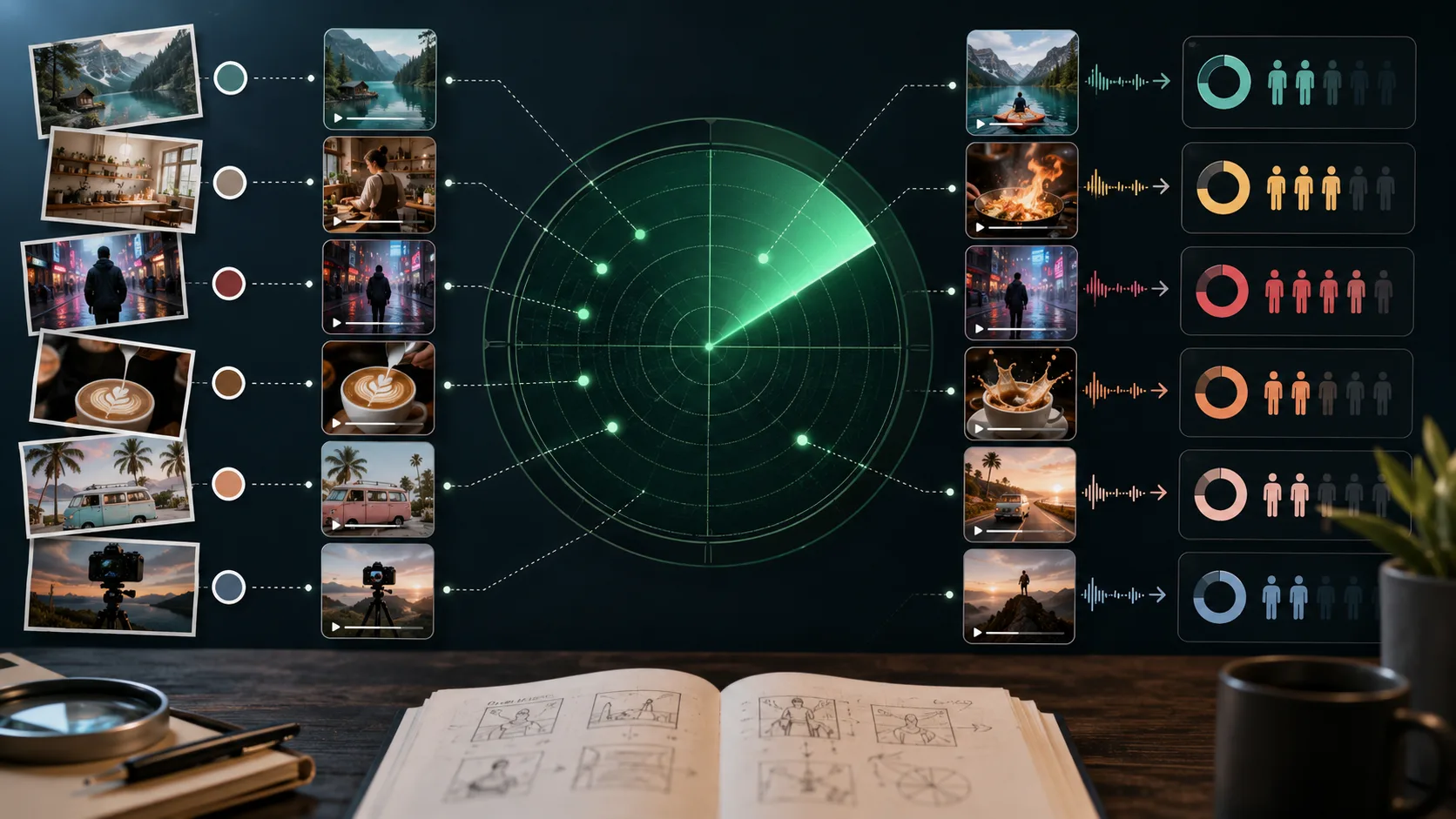
Look for a format you can explain and test, not a clip you can only imitate.
Separate discovery from copying
Use trend feeds, creator posts, and template libraries as discovery signals. Then make a fresh version from your own permitted source. Do not lift somebody else’s footage, a person’s likeness, brand assets, or music just because a format is moving quickly.
That distinction helps separate AI video trends worth studying from individual clips that only make sense in their original context.
The AI video trend lifecycle is a useful reminder that a format can peak before a team has finished planning a large campaign. A small test gives you more information than a long approval chain.
Run a small, controlled test
Pick one clear source image and one message. Keep the caption, audience, and placement in mind before you generate. If a template fits, use AI video templates to make two restrained candidates rather than ten unrelated effects.
Ask three questions after the test:
- Can a viewer understand the clip in the first second?
- Does the motion help the source, or make it harder to recognize?
- Would the format still make sense if the trend label disappeared tomorrow?
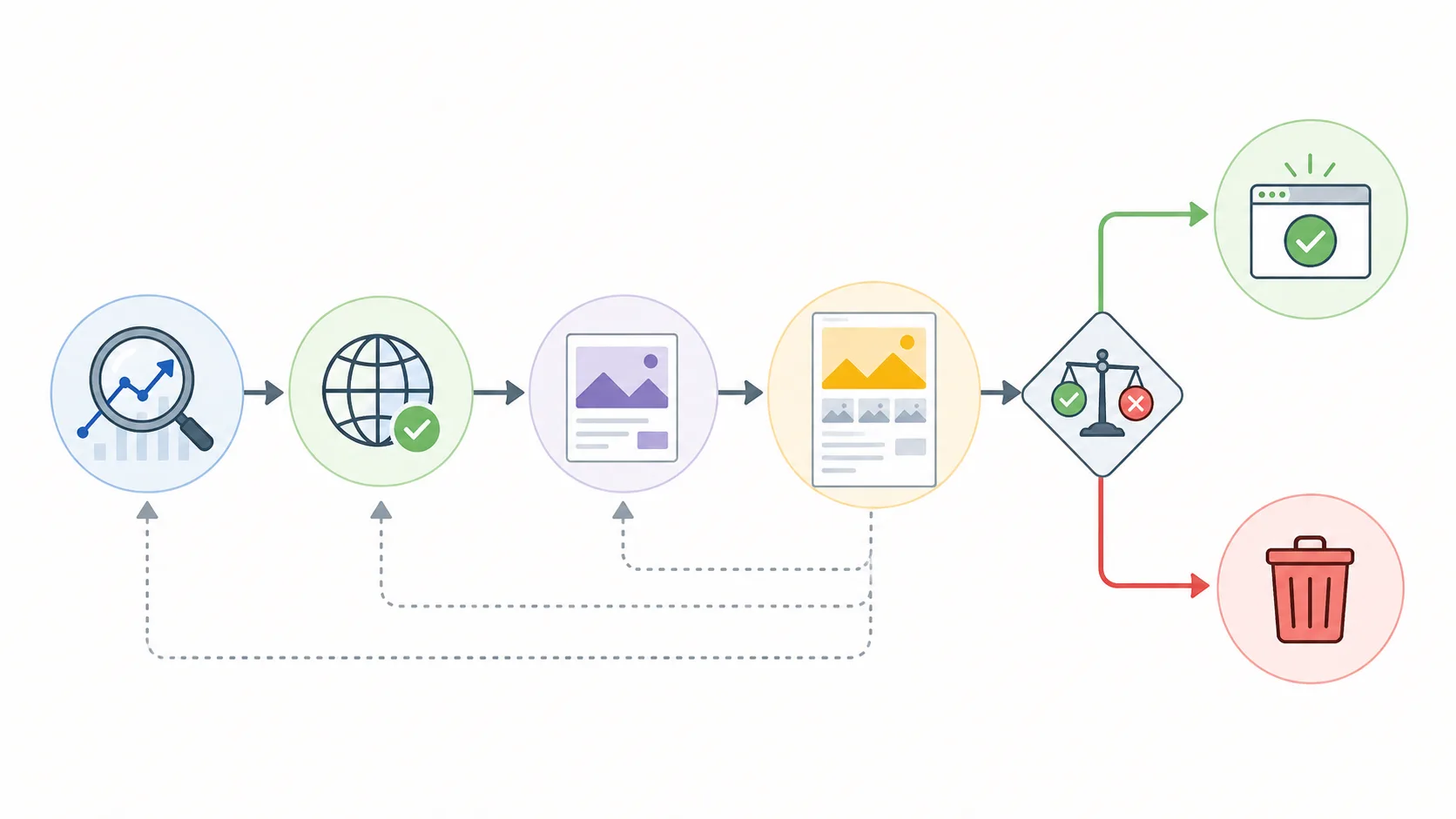
A fast “skip” can be as valuable as a fast publish.
Measure the right outcome
Do not use a single high view count as proof that a format works for your account. Compare the first-second clarity, useful actions, comments, and production quality. The template performance guide shows how to keep those comparisons fair.
AI video trends move quickly, but your test can still be deliberate: use a permitted source, preserve what the viewer needs to recognize, and choose a format because it serves a real message.
When AI video trends no longer serve that message, skip them and keep the learning from the small test.