AI Video Generator Use Cases: Match the Tool to the Job
The best AI video generator use case starts with a job, not a feature list. A creator with one strong photo, a shop with a product shot, and a team testing a repeatable social format all need different inputs, review steps, and expectations.
Treat the AI video generator as a way to test the next visual decision, not as a substitute for the approval process behind the final asset.
Last updated: July 27, 2026 · about 6 min read
An AI video generator can help turn an idea into a short visual draft. It cannot verify a product claim, confirm that a person consented to animation, or replace a normal edit when the final asset needs exact text or facts.
Choose the input that matches the job
| Job | Sensible starting point | What to review before publishing |
|---|---|---|
| Animate one approved photo | Image-to-video | Source permission, face/product stability, final frame |
| Test a familiar social format | AI video templates | First-second clarity, crop, and whether the effect fits |
| Plan a custom short scene | A prompt-led sequence | Continuity, invented details, and exact claims |
| Explore a concept with a team | A low-stakes draft | Whether the concept survives normal production review |

The right workflow is defined by what the clip must communicate.
Use case 1: a creator animates a single photo
When the source image is the point—a travel photograph, illustration, permitted portrait, or still life—start with one movement and one camera idea. A clear first frame makes a better clip than a complicated prompt trying to hide an ambiguous source.
See how to turn a photo into a video for a basic workflow. If the animation involves a real person, confirm they agreed to the intended use before you generate or share it.
Use case 2: a shop tests a short visual idea
For a product-led clip, treat the generated movement as a visual draft. Keep product shape, brand assets, price, and factual copy in approved source files. A template can make a test faster, but it should not invent packaging text or promise what a product does.
Use case 3: a team chooses a repeatable format
Teams often need a format they can evaluate repeatedly: a gentle product reveal, a simple before-and-after concept, or a portrait-led introduction with permission. Templates work well here because they keep the basic visual structure consistent while the team changes only the source or message.
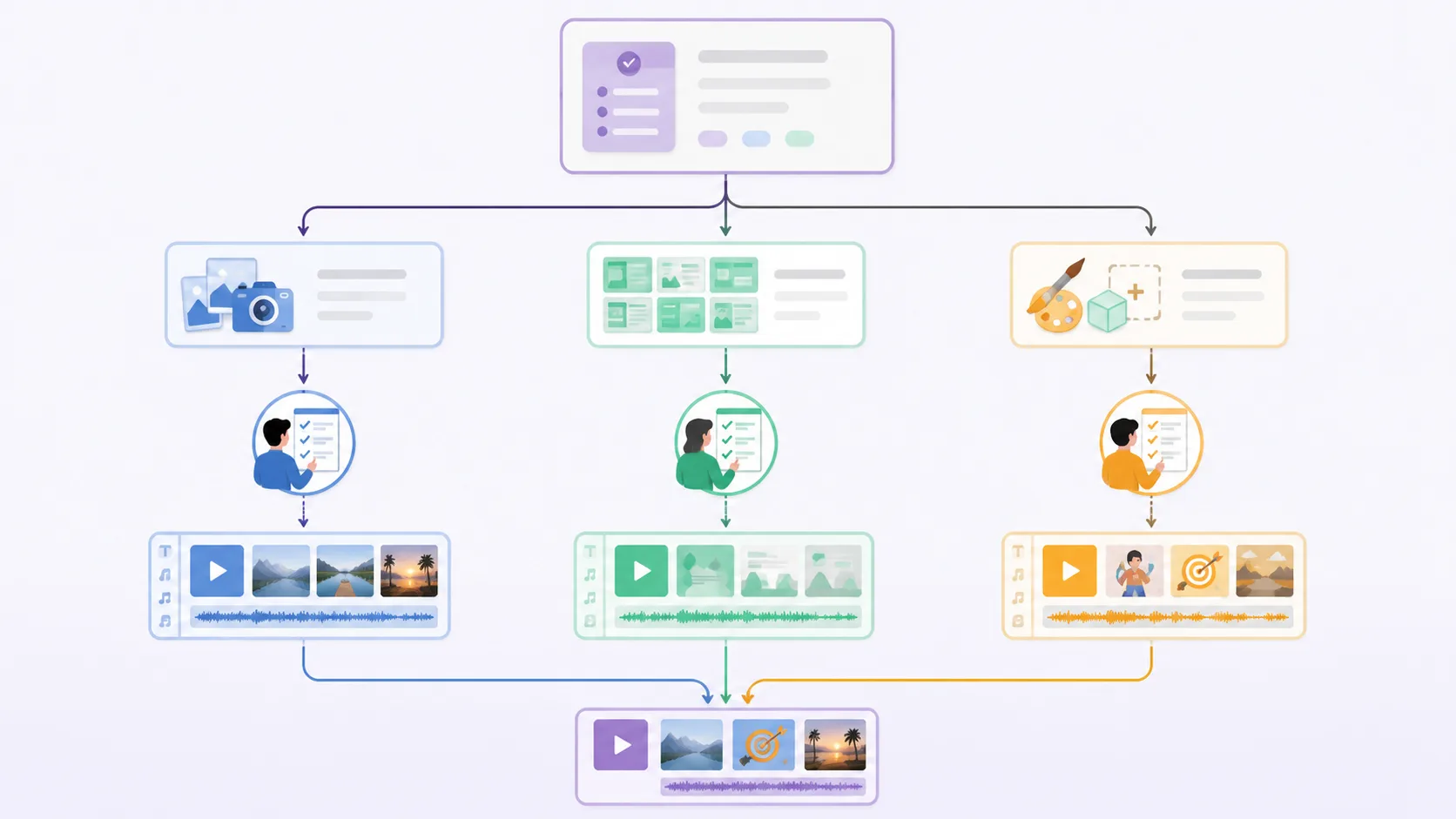
Use a repeatable format when you want to learn from one test to the next.
Keep one human review step
Before you post, check the whole frame—not only the most impressive second. Look for warped edges, incorrect details, misleading motion, and any text or claim that needs an approved edit. The AI video template checklist is a useful final pass.
The useful AI video generator use case is the one that makes a real production decision easier. Choose a modest test, keep the source and message clear, and use the result to decide what deserves a fuller edit.